
Tag: modified cars uk

  • Stance vs Performance: Which Car Culture Actually Wins in 2026?

    Stance vs Performance: Which Car Culture Actually Wins in 2026?

    Right then. The debate that has started more arguments in a McDonald’s car park than any other topic in UK car culture. Stance vs performance cars. Two tribes, two very different philosophies, and absolutely zero chance of a peaceful resolution any time soon. One side wants to scrape the tarmac on coilovers so aggressive the car physically cannot enter a multi-storey car park. The other side wants lap times, data logs, and the kind of corner speed that makes their passenger question every life decision they have ever made. Both are brilliant. Both have their issues. Let’s have it out properly.

    Stance vs performance cars side by side on a British street at night
    Stance vs performance cars side by side on a British street at night

    What Do We Actually Mean by Stance Culture?

    Stance is about aesthetics, full stop. The goal is a car that looks absolutely filthy when it pulls up at a meet. Stretched tyres, aggressive camber, the widest wheels you can physically squeeze under those arches, and a ride height that makes speed bumps a genuine moral dilemma. The community has deep roots in Japanese and European car culture, and it exploded across UK cruise meets throughout the 2010s. Walk around any big show in 2026 and you will still find rows of slammed Golfs, stretched Civics, and air-bagged BMWs sitting on the floor looking like they belong in a magazine rather than on the A34.

    Stance builds are labour-intensive, expensive, and deeply personal. A proper set of coilovers from a brand like KW or BC Racing is not cheap. Add custom wheels, stretched rubber, camber arms, and a respray, and you are looking at serious money. But the payoff at a meet? Unreal. There is nothing quite like pulling into a cruise night on a slammed FK8 with the crowd parting. That is the whole point. It is a rolling piece of art.

    What Does Performance Culture Actually Look Like in 2026?

    On the other side of the car park, the performance crowd is obsessing over something completely different. They want the car to go faster, stop shorter, and corner harder than it did when it rolled out of the factory. We are talking coilovers set for handling rather than height, quality brake pads, fast road tyres, an uprated intercooler, and maybe a remap to extract every last bit of power from the engine. The track day scene in the UK has grown massively, with circuits like Brands Hatch, Silverstone, and Cadwell Park filling up quicker than ever.

    Performance builds are judged on results. Lap times. 0-60 runs. Brake fade at the end of the back straight. It is a different kind of pride, more data-driven and arguably more stressful because you cannot hide behind visual appeal when you are getting overtaken by a bone-stock Clio on track. The performance crowd tends to buy less flashy but better quality parts, prioritising function over form. Their cars might look standard from fifty metres away but they will absolutely destroy you in a corner.
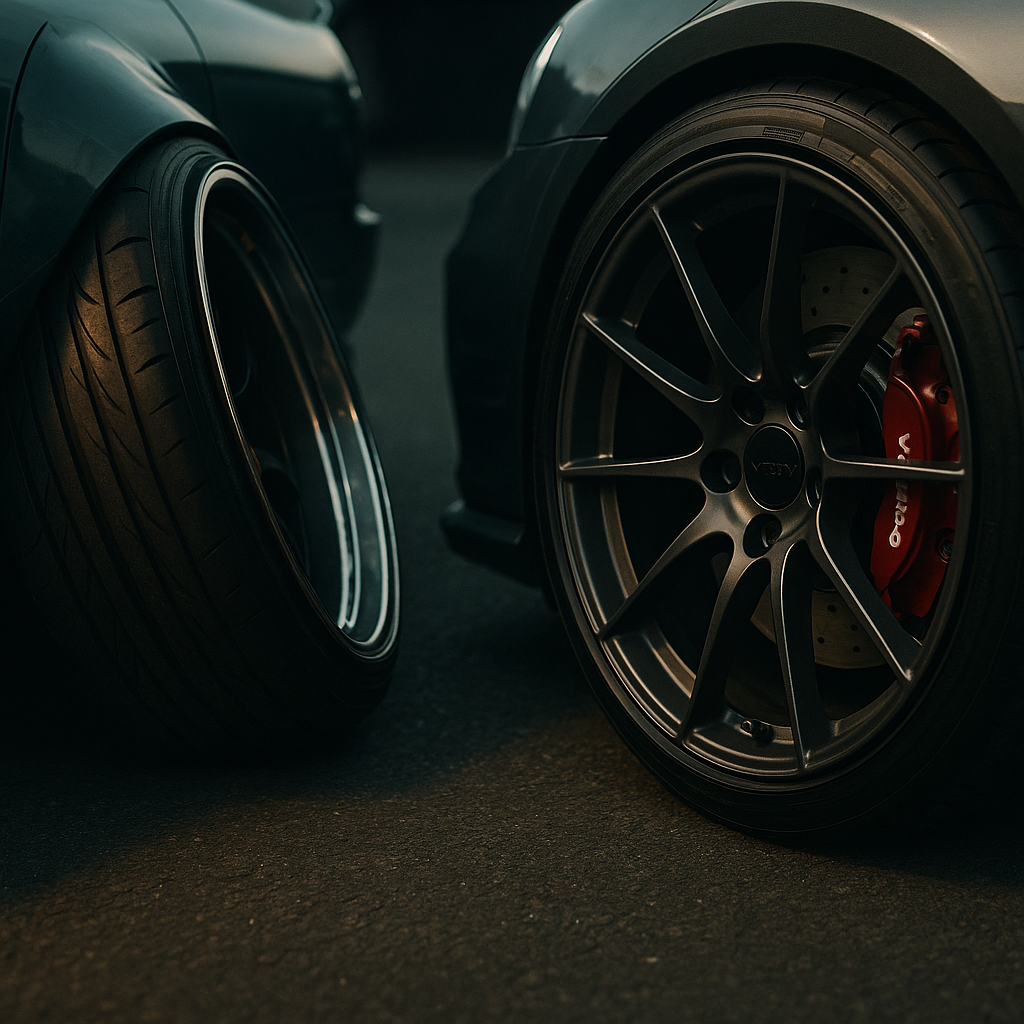
    Stance car wheel versus performance car brake setup in stance vs performance cars comparison
    Stance car wheel versus performance car brake setup in stance vs performance cars comparison

    The Real Problems with Each Side

    Why Stance Builds Frustrate People

    Let’s be honest about the downsides. A car set up purely for stance is, in most cases, genuinely worse to drive than standard. Extreme camber destroys tyre wear and seriously compromises braking performance. Ride height so low it barely clears a painted speed bump is not exactly practical on British roads, which, as anyone who has driven the M6 or a rural B-road in Lancashire will confirm, are absolutely dreadful. There is also the MOT issue. Excessive negative camber and stretched tyres have failed many a build at the local test centre, and the UK government’s vehicle approval standards do not care how good your car looks on Instagram. Stance can also attract the wrong kind of attention from the police, especially at cruise meets where enforcement has tightened up significantly.

    Why Performance Builds Have Their Own Baggage

    Performance culture is not without its own issues. A stripped-out track weapon with a roll cage and semi-slick tyres is not exactly something you want to commute to work in on a wet Tuesday morning in November. There is also the cost spiral. Once you start chasing lap times, there is always something else to upgrade. New brakes, then new pads, then braided lines, then a big brake kit, then someone tells you your dampers are the limiting factor. It never ends. And for all the technical satisfaction it brings, a performance-focused car at a cruise meet often gets overlooked next to a slammed show piece that catches every eye in the car park. The crowd at cruise nights tend to react to visuals first and specs second, which can be quietly frustrating for the performance builder.

    Can You Actually Have Both? The Daily That Does Everything

    Here is where things get interesting. The best builds in UK car culture in 2026 are the ones that refuse to pick a side. A properly set up Subaru Impreza WRX STI on a good set of coilovers at a sensible ride height, wide arches, tasteful wheels, and a solid tune is both eye-catching and genuinely fast. Same goes for a well-built Ford Focus ST, a Mitsubishi Evo, or a Golf R running quality suspension at a road-legal height with a decent remap. These cars look the part at a meet and can hold their own at a track day. That sweet spot exists, it just takes more skill, more research, and more self-restraint than going all-in on either extreme.

    The stance vs performance cars argument often ignores this middle ground, probably because nuance is less fun to argue about in a Greggs car park at midnight. But the hybrid approach genuinely produces the most versatile, impressive, and respect-earning builds in the scene right now.

    Where Does the UK Cruise Scene Actually Stand on This?

    UK cruise culture has always leaned visual. The roots are in show and shine, in turning up and turning heads. But the scene is maturing. More enthusiasts than ever are hitting track days alongside cruise meets, and the conversation around builds has got more technical and more nuanced as a result. Social media helps, as channels dedicated to both stance and performance have massive UK followings, and the cross-pollination of ideas is genuinely pushing builds in a more well-rounded direction.

    In 2026, the most respected builders in the UK scene tend to be the ones who understand both sides. They know their suspension geometry, they know their wheel fitment, and they know the difference between a spring rate that looks cool in a photo and one that actually works on a wet B-road. Respecting both cultures, rather than dismissing one entirely, is where the real knowledge sits.

    So Who Actually Wins the Stance vs Performance Debate?

    Nobody. And everybody. Stance culture wins at the meet, under the lights, with a crowd around the car. Performance culture wins on track, in the data, and when the roads open up. The car culture war between stance and performance will never be settled because they are measuring success by completely different standards. What you choose says more about you and how you enjoy your car than it does about which approach is objectively better. And frankly, both are a thousand times more interesting than a stock car sitting in a supermarket car park.

    Pick your side. Or better yet, build something that makes both sides have to admit you know what you are doing. That is the real flex.

    Frequently Asked Questions

    What is the difference between a stance build and a performance build?

    A stance build prioritises aesthetics, focusing on ride height, wheel fitment, camber, and visual impact at shows and cruise meets. A performance build prioritises how the car actually drives, targeting faster lap times, better handling, and improved braking through functional upgrades like quality coilovers, brake pads, and engine tuning.

    Are stance cars legal on UK roads?

    It depends on how extreme the modifications are. Excessive negative camber, stretched tyres, and ride heights that reduce ground clearance below legal minimums can all cause an MOT failure. UK vehicle standards require modifications to be roadworthy and safe, so extreme stance builds often struggle with annual testing.

    Can a stance car be used on a track day?

    Technically yes, but heavily stanced cars are not well-suited to track use. Extreme camber reduces straight-line braking performance, stretched tyres can delaminate at speed, and very low ride height causes ground clearance issues on circuit kerbs. Most track day venues in the UK will scrutineer your car and may turn you away if safety is a concern.

    How much does a proper performance car build cost in the UK?

    A solid entry-level performance build, covering a remap, quality coilovers, uprated brakes, and fast road tyres on a car like a Focus ST or Civic Type R, typically costs between £2,000 and £6,000 on top of the car purchase price. Serious track builds with roll cages, harnesses, and big brake kits can push well beyond £15,000.

    Which is more popular at UK car meets in 2026, stance or performance?

    Stance and show-focused builds still draw the biggest crowds at UK cruise meets and car shows, as visual impact is immediately rewarding and accessible. However, performance culture is growing rapidly thanks to the expanded track day scene, with many enthusiasts now pursuing builds that balance both aesthetics and real-world driving ability.

  • JDM vs Euro: Which Import Car Culture Dominates the UK Cruise Scene in 2026?

    JDM vs Euro: Which Import Car Culture Dominates the UK Cruise Scene in 2026?

    Right, let’s settle this once and for all. The great divide of UK car culture, the argument that’s been going on in car park meets, WhatsApp groups and YouTube comment sections for the better part of two decades. JDM vs Euro car culture. Which side is actually running things on the UK cruise scene in 2026? Not which side has the best keyboard warriors, but which culture is genuinely dominating the meets, the modifications, the social feeds and the hearts of British petrolheads right now. Buckle up.

    To be clear, this isn’t about which cars are faster on paper. It’s about culture, community, style and vibes. Both sides bring serious heat. But only one is having a proper moment right now, and we’re going to work out which one it is.

    JDM vs Euro car culture showdown at a UK nighttime cruise meet with modified cars lined up
    JDM vs Euro car culture showdown at a UK nighttime cruise meet with modified cars lined up

    The JDM Side: Legends, Legacy and Low Offsets

    Japanese domestic market culture in the UK has roots going back to the late 90s. The Fast and the Furious put Supras and Silvias on the radar of a generation, but British petrolheads had already been clocking the grey imports rolling off boats at Southampton docks well before Hollywood got involved. In 2026, the JDM scene is still going absolutely mental.

    Walk into any decent cruise night from Bristol to Bradford and you’ll see a sea of Civics, Imprezas, Evos, RX-7s, S-chassis Nissans and the odd immaculate Aristo or Chaser that someone clearly re-mortgaged their soul to import. The JDM crowd takes modification seriously. We’re talking full aero kits, genuine BBS or Enkei wheels, Cusco suspension, Bride buckets, full engine rebuilds and custom fabrication that would make a welder blush.

    On social media, the numbers speak for themselves. JDM-tagged content dominates TikTok and Instagram in the UK car space. Accounts dedicated to British JDM builds rack up hundreds of thousands of followers, and events like the JDM Legends Show pull massive crowds year after year. The culture has genuine depth, genuine history and a global community that amplifies every single UK build to an international audience.

    The modification scene around JDM cars is also a proper industry in this country. Tuning specialists in places like Birmingham, Manchester and Glasgow have built entire businesses around importing and modifying Japanese metal. And if you’re spannering your way through a project, you’re never short of parts sources, whether you’re hunting for coilovers for an Evo or tracking down Mitsubishi l200 parts for a tougher workhorse project alongside your weekend show car.

    The Euro Side: Refined, Rapid and Ruthlessly Cool

    Now don’t sleep on the European hot hatch and modified Euro scene, because it is absolutely not playing second fiddle in 2026. In fact, in certain circles it’s never been more dominant. The Golf GTI and Golf R still shift units like nobody’s business, the Audi S3 is basically the default cruiser for anyone who wants performance without looking like they’re trying too hard, and the Focus ST and RS community is as passionate as any JDM crew you’ll find.

    But it goes deeper than the obvious stuff. The VAG scene in the UK is massive. VWDRC, Players Classic, Volksfling and countless regional Euro meets pull in builds that rival anything the JDM world can throw up. We’re talking bagged Golfs sitting on air-ride with custom interiors that look like they belong in a magazine, widebody Polos on RS4 wheels, and tucked-up Seats that scrape the tarmac at every speed bump. The Euro scene has a particular obsession with fitment, stance and detail that honestly goes unmatched.

    The scene has also benefitted from the massive growth in German-car specific tuning culture. Revo, Milltek, Wagner Tuning, APR and others have turned the UK Euro tuning world into a genuine powerhouse. A Stage 2 Golf R making 380bhp on a relatively modest budget is a real and attainable thing. That accessibility has brought loads of new enthusiasts into the Euro fold.

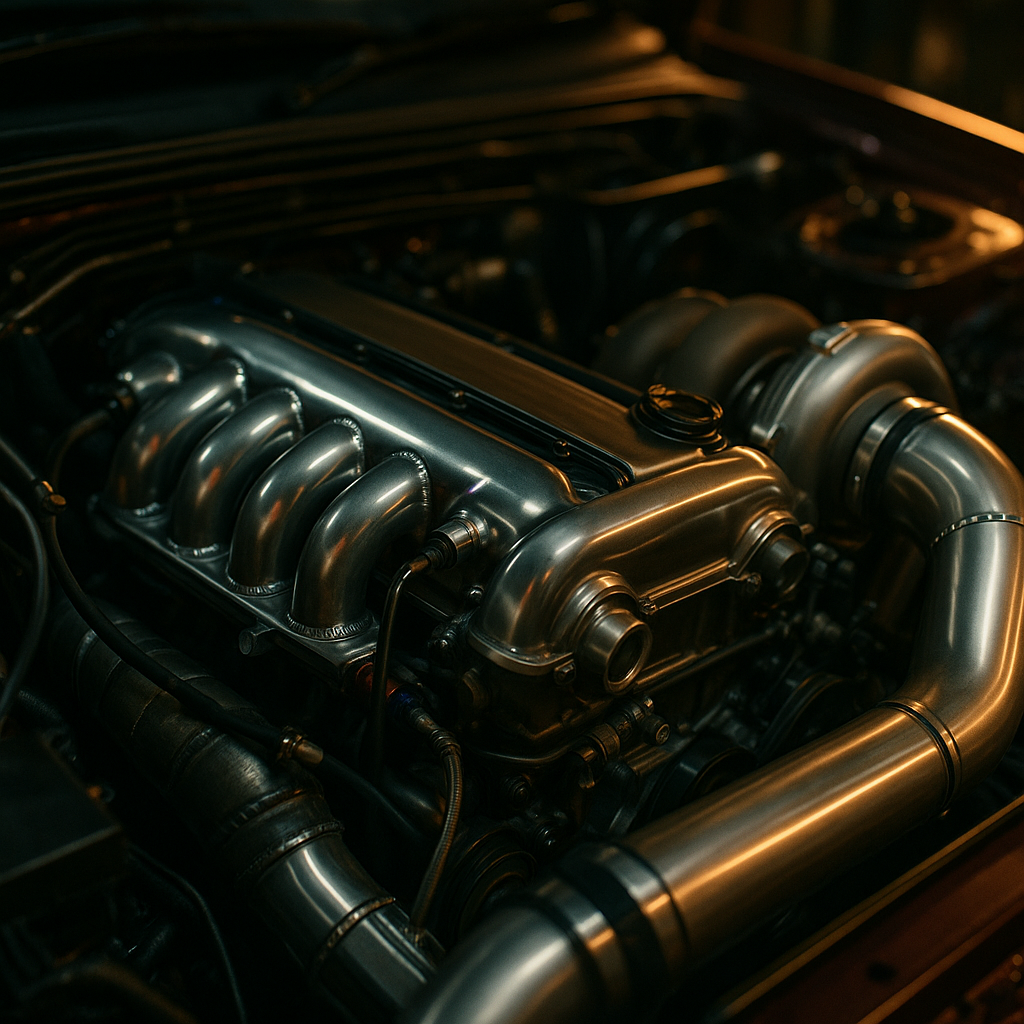
    Modified JDM engine bay showcasing tuning parts central to JDM vs Euro car culture builds
    Modified JDM engine bay showcasing tuning parts central to JDM vs Euro car culture builds

    What Are UK Car Meets Actually Showing in 2026?

    Here’s where it gets interesting. Spend enough time attending cruise meets around the UK and you start to notice patterns. In the North, particularly around Manchester, Leeds and Sheffield, JDM culture runs deep. You’ll see rows of Silvias, EK and EP Civics, Imprezas with full WRC-style wide arches and the occasional mental RB-swapped something that defies all logic. The Northern scene has a rawness to it that absolutely slaps.

    Down South, especially around London, the M25 corridor and the Home Counties, Euro culture has a stronger grip. The car park at a late-night south London cruise can look like a showroom floor for modified Volkswagen Group products. Pristine, detailed and social-media ready. There’s also a strong overlap with the premium scene, with AMGs and M-cars bridging the gap between the Euro enthusiast world and the general supercar crowd.

    Nationwide events like Japfest at Silverstone, which consistently draws tens of thousands of visitors, show the raw pulling power of the JDM scene. But Players Classic at Goodwood circuit and the various Euro-specific shows pack their own serious crowds. According to data from BBC coverage of major automotive events, UK car culture gatherings as a whole have seen significant growth in attendance post-2023, and both sides are benefitting from that wave.

    Social Media and the Clout War

    On TikTok and Instagram, both camps are thriving but in different ways. JDM content trends hard when something wild happens, an RB26-swapped 180SX pulls a massive flame, an EK9 gets a full cage and roll-cage spec build revealed, a bone-stock Chaser import gets a walkround from a UK creator with half a million followers. These moments go viral because they tap into nostalgia, aspiration and raw mechanical drama all at once.

    Euro content tends to do better in the detail and aesthetic lane. A beautifully shot MK7 Golf R on a misty morning on the B-roads of the Peak District? That’s going to rack up saves on Instagram for weeks. The Euro scene understands content creation on a slightly more refined level, and that suits the algorithm well.

    The honest answer is that neither side is losing the social media war. They’re just winning at different things.

    So Which Culture Actually Dominates the UK in 2026?

    Look, if you’re forcing me to pick a winner right now, today, in 2026? The JDM scene has the numbers, the events, the heritage and the raw passion. Japfest, JDM Legends, Trax and dozens of regional Japanese car shows pull bigger and more dedicated crowds than their Euro equivalents. The modification culture around JDM cars is simply more adventurous, more theatrical and more likely to produce something genuinely bonkers that breaks the internet.

    But the Euro scene is tighter, more polished and arguably more accessible to newcomers. A young lad on a budget can buy a £3,000 Focus ST, do a Stage 1 map, throw some coilovers on it and walk into any Euro meet with his head held high. That accessibility is keeping the scene incredibly healthy and consistently recruiting new blood.

    The real truth? UK car culture in 2026 is richer precisely because both tribes exist, argue and occasionally park next to each other at 11pm in a Morrisons car park arguing about who’s got the better exhaust note. And honestly, that’s exactly where we all want to be.

    JDM or Euro, pick your side, build your car and show up. The meet isn’t going to fill itself.

    Frequently Asked Questions

    What is JDM car culture in the UK?

    JDM stands for Japanese Domestic Market and refers to cars originally built for the Japanese home market, many of which were grey-imported into the UK. The culture around them includes modification, tuning, community meets and a deep appreciation for iconic Japanese performance cars like the Nissan Silvia, Subaru Impreza and Mitsubishi Evo.

    Which is more popular at UK car meets, JDM or Euro cars?

    It genuinely depends on the region. Northern cities like Manchester and Leeds tend to have stronger JDM representation, while London and the South often see more Euro-influenced builds. Nationally, dedicated JDM events like Japfest pull enormous crowds, but the Euro VAG scene has massive loyal followings too.

    Are JDM cars expensive to modify in the UK?

    Costs vary wildly depending on the platform. Entry-level JDM builds like a Honda Civic EK or Nissan 200SX can be modified fairly affordably, but rarer Japanese imports like an R34 Skyline or FD RX-7 will demand serious money for both parts and specialist labour. Parts availability has improved massively thanks to online suppliers and dedicated importers.

    What Euro cars are most popular at UK cruise meets in 2026?

    The Golf GTI and Golf R remain the backbone of the Euro cruise scene in the UK, alongside the Audi S3, Ford Focus ST and RS, and various modified VAG group products from Seat and Skoda. Stance and fitment builds on Volkswagen platforms are particularly dominant at dedicated Euro shows.

    Are car cruise meets legal in the UK?

    Organised cruise meets held on private land with permission are perfectly legal. It’s specific behaviours like racing, dangerous driving or blocking public roads that can draw police attention and Anti-Social Behaviour Orders under UK law. Most well-run meets operate within the law and have marshals or organisers managing the crowd.