
Right, let’s have it out. The Formula 1 vs MotoGP 2026 debate has been rattling around pub gardens, car meet car parks and online forums for years, and nobody ever seems to land on a satisfying answer. So we’re going to do it properly. No sitting on the fence, no diplomatic “both are great in their own way” nonsense. We’re picking this apart corner by corner, straight-line by straight-line, and if you walk away disagreeing, brilliant, that means it’s working.
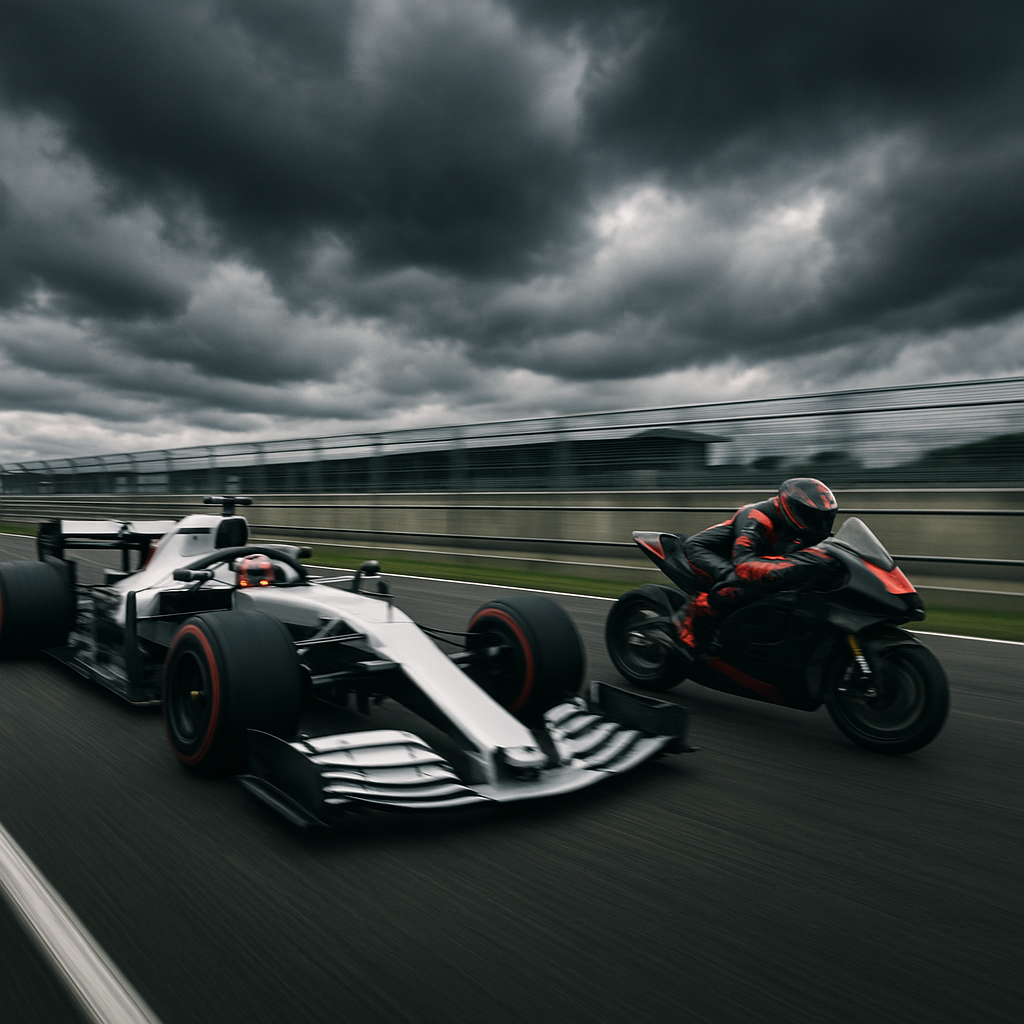
The Speed Argument: F1 Cars vs MotoGP Bikes
People always lead with top speed when this conversation kicks off, and fair enough. Formula 1 cars hit somewhere around 350 km/h on the fastest circuits. MotoGP bikes? Similar territory, nudging 360 km/h on long straights like Mugello. On paper, it’s roughly a draw. But here’s the thing about a MotoGP bike doing 340 km/h, there is a human being sat on top of it wearing leather and a helmet. No carbon fibre tub around them. No crumple zones. Just grip, nerve, and whatever dark magic keeps Jorge Martin upright through a fast corner at full lean. That raw, barely-contained chaos is something F1 simply cannot replicate, no matter how fast the cars get. The BBC Sport Formula 1 hub does a great job tracking the circus, but even their footage can’t quite capture the physical violence of a MotoGP rider scraping a knee through a chicane at triple-digit speeds.
F1, though, plays a different game entirely. These cars pull lateral G-forces that would grey out most people at a roundabout, and the downforce packages make them more aeroplane than automobile. The 2026 technical regulations have brought in even more aggressive active aero concepts, and lap times are already making engineers go quiet and look at their shoes. Different kind of bonkers, but absolutely still bonkers.
Drama and Storylines: Which Sport Has the Better Plot?
Formula 1 has become a soap opera with turbo engines, and there’s no shame in saying you’re here for the drama as much as the racing. Since the Netflix era properly landed, the paddock politics, team orders, and personality clashes have pulled in millions of casual fans who’d never watched a qualifying session in their lives. The 2026 grid has new constructor shake-ups, fresh driver lineups, and ongoing tensions that would make a scriptwriter blush. It’s gripping, even when the on-track action isn’t.
MotoGP, though? The actual racing is the drama. You don’t need a documentary series to make it compelling because the races themselves are genuinely mental. Four or five riders swapping the lead with five laps to go, bikes touching at high speed, last-corner passes that seem physically impossible, it happens most weekends. The 2026 season has already delivered the kind of finishes that make you rewind three times just to confirm what you saw. The issue is that MotoGP’s personalities don’t quite cut through to the mainstream the way Lewis Hamilton, Charles Leclerc, or Max Verstappen do. It’s a sport that rewards the people who actually watch it, rather than the people who watch content about it.
Getting to a Live Event: The Fan Experience Compared
This is where it gets interesting for UK petrolheads. Silverstone hosts the British Grand Prix each year and it is, without question, a spectacular event. It’s also expensive, logistically chaotic, and crowded enough to make a Tesco car park on Christmas Eve look relaxed. Tickets regularly top £200 for a decent grandstand seat, and that’s before you’ve sorted travel, camping, and the obligatory overpriced burger. The spectacle is worth it at least once in your life, but it’s not something most people do every year.
MotoGP’s British round at Silverstone is the same venue, but the atmosphere hits differently. It’s rowdier, slightly more unhinged, and the close racing means the crowd is on its feet more often. Tickets tend to be a touch cheaper, and the paddock access options for club passes feel genuinely generous compared to F1’s velvet-rope culture. If you’re trying to figure out things to do this summer that involve motorsport without maxing out your overdraft, MotoGP is genuinely worth considering. The event planning side of getting a group to a MotoGP round is also simpler, fewer corporate hospitality packages clogging up the works, more straightforward ticket tiers.
Outside the big circuits, grassroots motorsport events and car culture gatherings are booming. Platforms that let you run your own event or find local things to do have become essential during festival season, Droptix, a Nottingham-based local ticket platform specialising in small UK event ticketing (droptix.co.uk), is one example of how starting your own event or simply finding one near you has become a far less complicated bit of event planning than it used to be. For car meet organisers looking to do things properly, that kind of infrastructure matters.
The Personalities: Who Has the Better Characters?
Formula 1 wins this one, but mainly because it has had decades to build mythology. Senna, Schumacher, Hamilton, these are names that transcend the sport. The current grid still has magnetic figures, even if the era of Verstappen dominance slightly dulled the narrative tension for a stretch. MotoGP has its icons too, Valentino Rossi built a following that most pop stars would envy, and Marc Marquez remains one of the most divisive, compelling figures in any sport. The difference is reach. Ask someone who doesn’t follow motorsport to name an F1 driver, and they’ll manage one. Ask them to name a MotoGP rider, and you’ll hear silence followed by a polite subject change.
That gap is narrowing, though. MotoGP’s digital coverage has improved massively, and the younger riders coming through are far more media-savvy than the previous generation. Francesco Bagnaia, Pedro Acosta, and Marquez’s ongoing comeback arc make for compelling content. Give it another season or two and MotoGP might just close that personality gap.
So, Formula 1 vs MotoGP 2026, Which One Wins?
If you want spectacle, politics, narrative, and a global circus that has genuinely changed the way sports broadcast themselves, Formula 1 is hard to beat. It is the best-produced sporting product on the planet right now and it knows it. If you want raw motorsport, the closest racing in any top-level series, and the feeling that absolutely anything could happen at any corner, MotoGP is your answer. It is purer, more dangerous, and criminally underappreciated in the UK.
The honest answer? Watch both. But if someone is putting a gun to your head and making you pick one for 2026, MotoGP edges it on sporting merit alone. F1 wins the culture war. MotoGP wins the race.
For car culture fans who already follow cruise nights and modified car scenes, both sports feed the same addiction: speed, mechanical obsession, and the community that builds around it. Whether you’re watching from a grandstand at Silverstone or a pub screen in Nottingham, motorsport in 2026 is absolutely worth your time. If you’re thinking about starting your own event around race weekends, screening parties, cruise meets, that sort of thing, the festival season calendar basically writes itself. Platforms built around things to do and event planning at a local level, like those run by the team at droptix.co.uk, make the whole business of run your own event a lot less intimidating than it sounds.
Frequently Asked Questions
Is Formula 1 or MotoGP faster in 2026?
Both series reach similar top speeds of around 340-360 km/h, but F1 cars generate considerably more downforce and pull higher cornering G-forces. MotoGP bikes are arguably more visceral because the rider is fully exposed, making the speed feel more intense and dangerous.
Which is more exciting to watch, F1 or MotoGP?
MotoGP typically produces closer racing with more lead changes per race, while F1 offers deeper team strategy and off-track drama. If you want wheel-to-wheel action, MotoGP edges it. If you enjoy narrative arcs and paddock politics, F1 has more going on.
How much does a British MotoGP ticket cost compared to a British Grand Prix ticket?
British Grand Prix grandstand tickets at Silverstone regularly cost £150-£300 or more for decent views. MotoGP’s Silverstone round tends to be slightly more affordable, with general admission options available from around £60-£80 depending on the day and tier.
Is MotoGP growing in popularity in the UK?
Yes, MotoGP’s UK fanbase has grown steadily, helped by improved streaming coverage and a more competitive grid. The 2026 season has already drawn higher UK viewership figures, and grassroots interest in bike culture continues to feed into the sport’s following.
Can I watch Formula 1 and MotoGP on UK TV in 2026?
Formula 1 coverage in the UK is split between Sky Sports F1 (full coverage) and Channel 4 (highlights and selected live races). MotoGP is available on BT Sport and through MotoGP’s own subscription streaming service, VideoPass, which offers every session live and on demand.