
Right, let’s cut through the YouTube dyno-bro nonsense and talk about what actually matters when you’re picking between forced induction setups for a car that has to survive Spaghetti Junction, a speed bump outside a Tesco, and a rainy Tuesday on the M62. The supercharger vs turbocharger UK road car debate has been going on since blokes in shell suits were lobbing turbos onto Novas, and honestly, both sides still have a legitimate case. I’ve spent a fair bit of time around boosted builds, and the answer is almost never as simple as “turbos are better” or “superchargers are smoother.” It depends entirely on what you’re building, what you’re spending, and how much grief you want from your insurer.
How they actually work, and why it matters on UK roads
A turbocharger uses exhaust gases to spin a compressor that forces more air into the engine. Clever, efficient, free energy from waste gas. A supercharger is driven directly off the crankshaft via a belt, so it’s always on, always pushing air, no waiting around. That distinction sounds dry until you’re pulling out of a roundabout onto a dual carriageway and you need the power now, not in 1.5 seconds when the turbo decides to wake up.
Turbo lag is less of a problem than it was a decade ago. Modern ball-bearing turbos and variable geometry units on cars like the Golf GTI have all but killed the old “boost cliff” drama. But on a budget build, especially if you’re retrofitting a larger aftermarket turbo to something like a 1.8T or a Zetec, lag is still very real. Out on UK A-roads with their constant roundabouts, junctions, and 30mph zones, a supercharger’s instant linear delivery genuinely feels more usable day-to-day.
Real-world costs in 2026: what you’re actually looking at
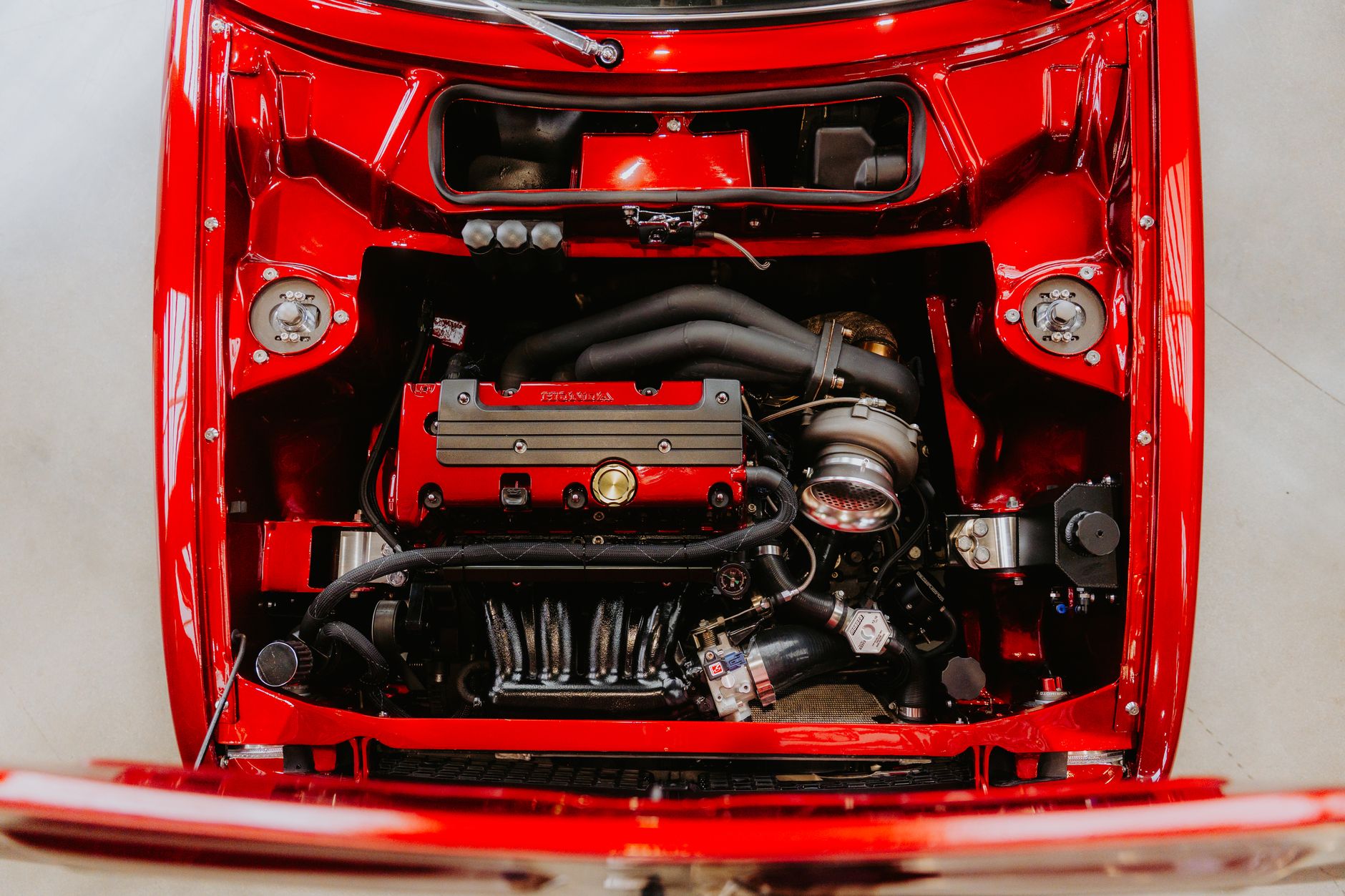
Budget is where most decisions get made for UK enthusiasts, and the gap between the two setups is significant. A quality aftermarket turbo kit for something like a Honda Civic Type R base or a Focus ST platform will run you anywhere from £800 to £2,500 depending on brand, with installation adding another £400 to £800 at a decent independent tuner. Remapping on top of that adds another £300 to £600. So you’re looking at roughly £1,500 to £4,000 all-in for a properly mapped turbo conversion.
Supercharger kits are almost always pricier up front. Rotrex, Magnuson, and Harrop kits for popular platforms frequently start around £2,000 and can hit £5,000 before you’ve paid anyone to fit them. Installation time tends to be longer too, partly because the belt drive integration requires more precision. On the flip side, superchargers generally need less supporting modification. You don’t always need an intercooler upgrade, heat soak is more manageable, and the fuelling demands are slightly less aggressive at moderate power levels. If you’re chasing reliable, low-stress daily power rather than maximum figures, that cost gap can look more justifiable.
One thing I’d flag: if you’re already deep into remapping your car in the UK, adding forced induction on top changes everything about how your tune needs to be set up. Don’t assume a remap done before a supercharger install is still safe afterwards. It isn’t.
Insurance: the bit everyone ignores until it’s too late
Here’s where things get properly uncomfortable. Forced induction, whether a turbo or a supercharger, is a significant engine modification in the eyes of virtually every UK insurer. You are legally required to declare it. Failing to do so invalidates your policy, full stop. The Association of British Insurers is pretty clear on this: non-disclosure of modifications that affect vehicle performance is grounds for claim refusal and potential policy cancellation.
In practice, turbo additions on naturally aspirated engines are viewed as higher risk than supercharger conversions by some specialist insurers, partly because of the tuner community’s association with higher power outputs and the modification’s relative ease of pushing beyond safe limits. That said, every insurer is different. Adrian Flux, Footman James, and A-Plan are among the better-known UK specialists who will actually quote on modified setups without laughing you off the phone. Expect a premium increase of 20% to 60% once forced induction is declared, depending on the car and your profile. If you’re already dealing with modified car insurance getting harder to find, adding a blower or a turbo is only going to narrow your options further.
MOT and legality on UK roads
Neither setup is inherently illegal. Forced induction on a road car is perfectly lawful in the UK provided the installation doesn’t compromise safety systems, the car still passes its MOT emissions test, and the modification is properly declared to the DVLA if it changes the vehicle’s taxation class (rare, but possible on some older vehicles). The MOT emissions issue is the real concern for turbocharged builds especially. Running too rich under boost, or having a poorly mapped fuelling system, will tank your emissions figures at the annual test. Supercharged setups, because they tend to operate at lower boost pressures on road-car builds, often clear emissions more cleanly.
Modifications that alter the structure of the intake or exhaust beyond standard can also create issues around noise limits. If your supercharger whine or turbo whoosh is audible at 20 metres, a traffic officer with nothing better to do could theoretically pull you over under Section 59 of the Police Reform Act 2002. Unlikely, but not impossible. Worth bearing in mind if you’re building something genuinely loud. On that note, if you’re already sweating your MOT because of other mods, have a read of what UK MOT testers are currently clamping down on before you commit to any forced induction install.
Which setup actually suits daily driving on British roads?
My honest take: for a true daily driver in the UK, a supercharger is the more satisfying setup at sane power levels. The instant response suits the stop-start nature of British roads. There’s no lag off traffic lights, no flat spot exiting a tight island, and the power delivery feels natural rather than aggressive. Heat management is also simpler on a road car that spends three hours a week in traffic. Turbos generate significant heat and need proper cooling; if your car sits in rush hour regularly, that’s worth accounting for.
That said, if you want the biggest power gains for the budget, turbocharging wins. The efficiency advantage of extracting energy from exhaust gases means that at equivalent power levels, a turbo setup is typically more fuel-efficient than a supercharger. On a long motorway run, that matters. And for anything chasing 300bhp or beyond on a modified platform, turbos are almost always the go-to because the ceiling is so much higher.
The scene I’ve seen at meets across the country splits fairly predictably: serious track-day cars and high-power builds tend to run turbos; cleaner, more streetable daily setups increasingly go supercharged, particularly on platforms where supercharger kits are well-developed. Neither is wrong. Both will get looks in the car park. Just make sure whichever one you bolt on is declared, mapped properly, and doesn’t make your insurance void before you’ve even left the industrial estate.