
Let me be straight with you. Rocking up to your MOT in a car that’s been dropped, resprayed, remapped and kitted out with aftermarket everything is basically asking the tester to ruin your week. I’ve seen lads spend thousands building something genuinely sick, only to watch it get failed on a £40 bulb fitment issue they could’ve spotted in five minutes on the drive. Modified car MOT fails UK 2026 are not a myth. They are very much happening, and testers are getting sharper about what they’re looking for.
This isn’t a lecture. It’s a heads-up. Here’s what’s actually getting cars failed right now, and what you need to sort before you book that test.
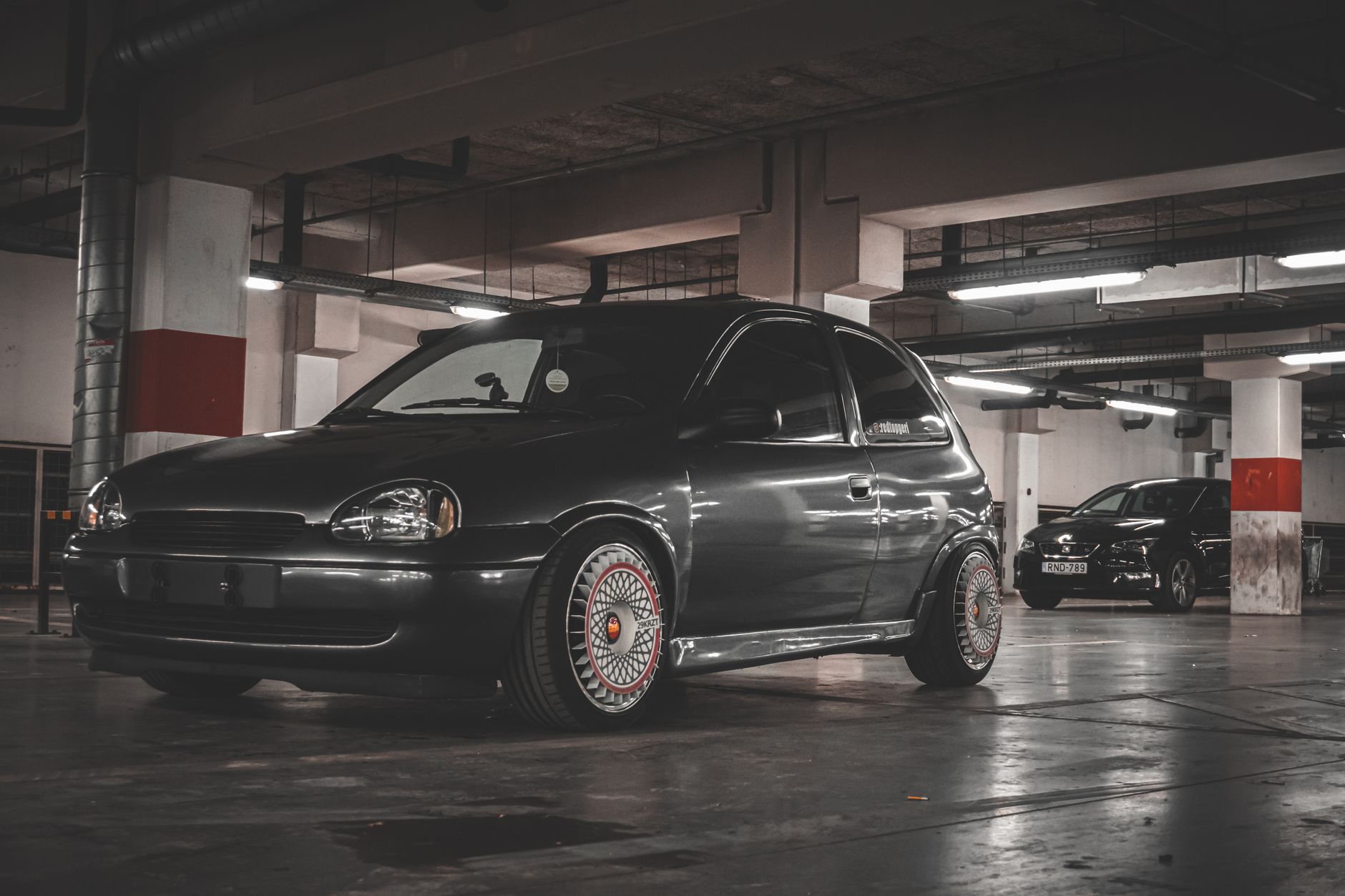
Suspension drops: the number one killer of MOT certificates
Lowering your car is basically a rite of passage in UK car culture. I get it. A slammed hot hatch just looks better. But the MOT tester doesn’t care about aesthetics. They care about geometry, tyre clearance, and whether your car’s suspension can still do what suspension is supposed to do.
The main failure points are bump steer caused by severely altered geometry, tyres rubbing on arches or inner wings (which counts as a dangerous structural issue), and coilover setups that have been wound so low the dampers have virtually no travel left. If your car scrapes over a speed bump at 3 mph, it’s not going to sail through a test centre ramp without the tester raising an eyebrow and a clipboard.
As a rule, if you’ve dropped the car more than about 40mm from standard ride height, you want to double-check your tracking and make sure there’s no contact between tyre and arch under full lock. We’ve covered the specifics in detail in our suspension lowering UK guide, but the short version is: go too far without proper geometry correction and you’re binning your MOT certificate before you even get to the emissions test.
Aftermarket lighting that the MOT tester absolutely hates
Smoked headlight overlays. Tinted rear clusters. LED conversions that aren’t type-approved. Angel eyes. Demon eyes. Underbody neon strips. All of it is on the radar in 2026, and testers have a clear checklist.
Headlights must illuminate in the correct colour (white or yellow at the front, red at the rear), aim correctly, and be of a type approved for road use. Aftermarket LED conversion kits that weren’t designed for your specific headlight housing cause scatter patterns that fail the beam alignment test almost every time. The MOT standard checks that the light output is within a defined tolerance and aimed at the right point on the wall. A cheap conversion kit that fires light in seventeen directions at once isn’t passing that.
Interior lighting is a bit of a grey area during the MOT itself, but if you’ve wired in strobing LEDs that affect visibility of dash warning lights, that’s a problem. Keep it clean. Type-approved bulbs, proper fitment, and lenses that haven’t been tinted to the point of reducing output below the required lux level. The GOV.UK MOT guidance spells out lighting requirements clearly enough that there’s really no excuse for turning up in the dark.
Exhausts, noise, and the emissions check that catches everyone off guard
A loud exhaust is a staple of the UK cruise scene. But loud and legal are two different things, and the MOT emissions test is where a lot of modified cars come unstuck in ways their owners genuinely didn’t see coming.
Straight-piped cars, cats that have been gutted or removed, and aftermarket exhausts fitted without a functioning catalytic converter will fail on emissions. Full stop. The tester sticks a probe in your tailpipe and measures hydrocarbons and carbon monoxide. If your cat is missing or dead, those numbers shoot up and you’re done. This is especially relevant if you’ve had your car remapped, because aggressive fuel maps on a car with a compromised catalyst will absolutely nail you on CO output. Have a read of our piece on remapping and MOT emissions in the UK before you commit to anything drastic.
On the noise side, the MOT test itself doesn’t include a formal decibel check, but a tester can fail a vehicle on the grounds of an exhaust that has a leak or isn’t properly secured. A cracked manifold joint, a blowing gasket, or a cat-back that’s hanging off one rubber mount is an advisory at best and a failure at worst.
Wheels, tyres, and the mods people think are fine (they’re not)
Stretched tyres are fashionable in stance culture. MOT testers are not fans of stance culture. A tyre that’s been stretched so far over a wider rim that the sidewall is visibly deformed can be failed on the grounds of an unsafe tyre condition. The tester doesn’t need to measure it with a protractor; they just need to judge it unsafe, and that’s a legal grounds for refusal.
Spacers are another one. Bolt-on wheel spacers that push your wheels out beyond the arch line aren’t automatically illegal, but they become a problem if they reduce your wheel bearing life to the point of detectable play, or if the wheel protrudes beyond the bodywork in a way that creates a hazard. Stick to hub-centric spacers and check for any play in the hub before you even think about booking your test.
Oversized alloys that rub under full lock? Failure. Mismatched tyre sizes that affect the speedometer reading by more than the permitted tolerance? Technically an advisory that can escalate. Check your tread depth on all four corners too, because 1.6mm is the legal minimum across the central three-quarters of the tyre width. Don’t assume your track day tyres are road-legal just because they’re from a reputable brand.
Bodywork, windows, and the stuff everyone forgets
Cracked windscreens, chips in the driver’s eyeline zone (that’s roughly a 290mm wide band centred on the steering wheel side), and aftermarket tints that are too dark all cause failures. The legal limit for front side windows is 70% light transmission. A lot of the pre-cut tint kits you see online are 35% or darker, which is straight-up illegal and a definite MOT fail.
Bonnet vents, bumper modifications, and wide arch kits that leave sharp edges protruding count as a hazard to pedestrians. If your fibreglass arch kit has cracked and left a jagged edge, sort it before the test. Testers walk around the entire car looking for this stuff.
What to actually do before you book
The smartest move is an honest pre-MOT check, either yourself or at a garage you trust. Go through every modification you’ve made and ask yourself whether it alters something safety-critical. If the answer is yes or even maybe, address it first.
Some mods are genuinely reversible for the test and then re-fittable afterwards, which is a route some people take with things like non-type-approved lighting. I’m not here to judge the approach, but I will say: a tester who sees a car that’s clearly had bits swapped out in a hurry is going to look harder at everything else. Better to just build it right from the start.
The cruise scene is at its best when people know their cars properly. Modified car MOT fails UK 2026 are completely avoidable if you do your homework. The lads showing up to UK cruise meets in properly sorted, road-legal builds always get more respect anyway. Sort the paperwork. Then enjoy the road.
Frequently Asked Questions
What are the most common modified car MOT fails in the UK?
The most common failures on modified cars are illegal tyre condition (including stretched tyres), aftermarket lighting that doesn’t meet beam or colour standards, removed or gutted catalytic converters causing emissions failures, and suspension that’s been dropped so far it causes tyre-to-arch contact or insufficient damper travel. All of these are easily checked before you book the test.
Will a remap cause my car to fail its MOT emissions test?
A remap alone won’t automatically cause a failure, but an aggressive fuel map combined with a worn or missing catalytic converter almost certainly will. The MOT checks carbon monoxide and hydrocarbon output at the tailpipe, and a car running a performance map without a functioning cat will often exceed the permitted limits. Get your cat checked before testing.
Are wheel spacers legal for MOT purposes?
Wheel spacers aren’t automatically illegal, but they can cause an MOT failure if they introduce detectable play in the wheel bearing, cause the tyre to protrude beyond the bodywork in an unsafe way, or compromise the wheel’s secure fitment. Hub-centric spacers are the safer option, and you should check for any bearing play before taking the car in.
Will tinted windows fail an MOT?
Yes, if the tint reduces light transmission below 70% on front side windows or below 75% on the windscreen. Rear windows have no legal minimum, but front windows are checked and failing to meet the legal limit is a definite MOT failure. Many aftermarket tint kits sold online are darker than the legal limit for front windows.