Category: Car Meets

  • Northern England’s Car Cruise Scene in 2026: Why Manchester, Leeds, and Sheffield Are Running the Country Right Now

    Northern England’s Car Cruise Scene in 2026: Why Manchester, Leeds, and Sheffield Are Running the Country Right Now

    Let’s get one thing straight. If you’re still sleeping on car cruise meets in Northern England in 2026, you’re basically that bloke who shows up to a meet two hours late wondering why all the decent parking spots are gone. The north has been quietly cooking for years, and right now? It’s properly kicking off. Manchester, Leeds, Sheffield, Newcastle, they’re not just catching up with the south. They’ve lapped it.
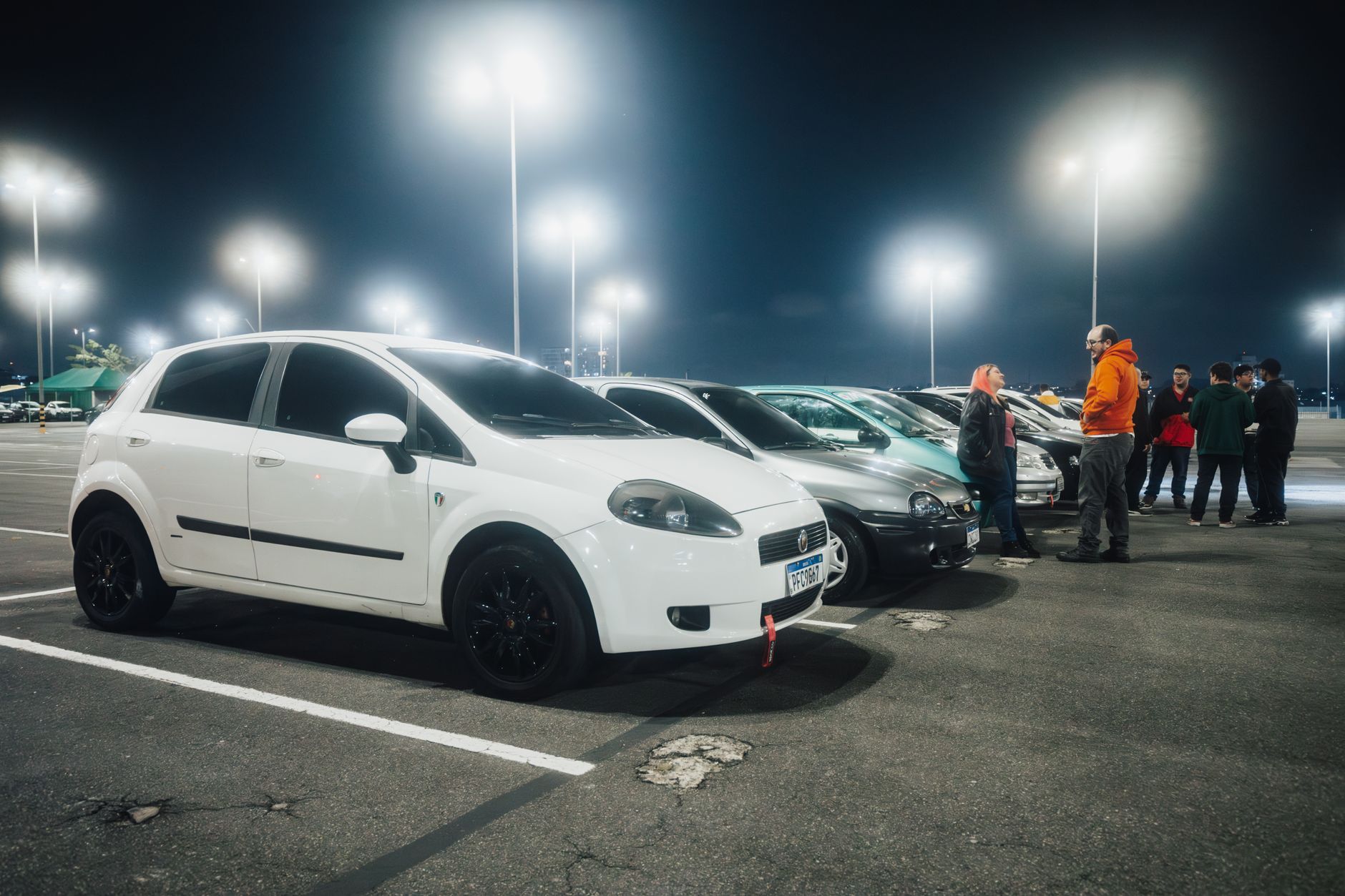
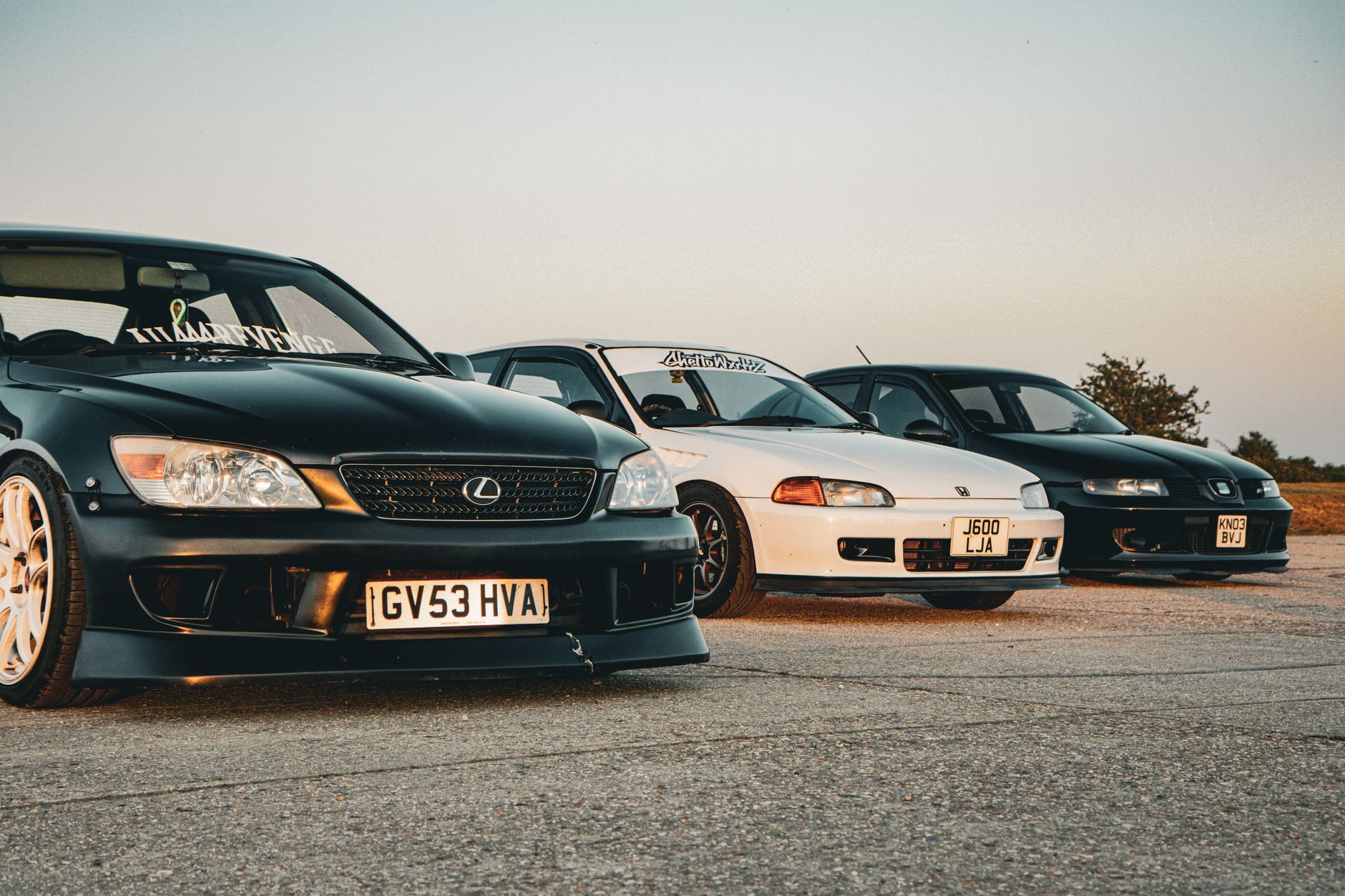
    Evening car cruise meets in northern England 2026 with rows of modified cars at a large industrial estate meet
    Photo by Matheus Bertelli on Pexels

    I’ve been to meets across the country, and I’ll tell you honestly, there’s an energy up north that’s different. The cars are real. The people are gassed about them. Nobody’s standing around looking moody for Instagram. It feels like car culture the way it used to feel before everyone got precious about it. This isn’t gatekeeping, it’s just facts.

    Why the northern scene is genuinely different in 2026

    Part of what makes the north’s cruise scene tick is the sheer variety of it. You’ve got everything from serious JDM builds and turbocharged hatchbacks to immaculate show cars that look like they’ve never seen a pothole (good luck with that on northern roads, mate). The scene isn’t locked into one tribe. Stance lads park up next to track-day weapons. Old school Mk4 Golf GTI owners swap notes with blokes who’ve spent the last six months sorting out a GR86. It’s mixed in the best possible way.

    The other thing? The industrial geography of the north means there are genuinely brilliant locations. Retail parks, old docklands, wide-open trade estates on a Sunday morning, loads of it is private land, which keeps things legal and keeps the fun going. If you’re curious about how that works legally, how UK cruise meets are using private land to stay one step ahead is worth a read before you organise anything yourself.

    Manchester: the city that doesn’t sleep (and neither do its meets)

    Greater Manchester is arguably the engine room of northern car culture right now. The Trafford area, parts of Salford, and Stockport all host regular gatherings, and the turnout on a dry Saturday evening is something else. We’re talking 200-plus cars on a good night, ranging from bone-stock daily drivers to properly built track monsters.

    The modified car scene in Manchester is especially strong on hatchbacks. Fiesta STs, Polo GTIs, Clio 182s, the affordable end of the hot hatch market dominates, because this is a city where people actually drive their builds rather than trailer them everywhere. If you’re thinking about picking up a bargain project to take to meets, the Clio 182 is still one of the best value hot hatches you can buy and it turns heads every time at Manchester meets without fail.

    Leeds: proper working-class car culture that respects the craft

    Leeds has a hardcore following, full stop. The meets around the eastern side of the city and down towards the M62 corridor attract a crowd that is genuinely knowledgeable. These aren’t people who’ve slapped a bodykit on and called it a build, they’re into their remaps, their brake upgrades, their suspension geometry. They read the spec sheets. They argue about damper rates. It’s brilliant.

    The Leeds scene also has a strong JDM influence that’s grown noticeably over the last couple of years. Silvias, Evos, Imprezas, proper stuff, not just JDM-stickered Corsas. The northern England cruise scene article I put together a while back scratches the surface, but Leeds specifically deserves its own chapter at this point.

    One thing Leeds meets do well is the social side. There’s a proper community feel, people actually talk to each other rather than standing in a circle staring at their phones. Clubs link up. Events get announced in group chats with genuine organisation behind them. It’s not chaotic in the way some southern meets can get.

    Sheffield: the dark horse you’ve been underestimating

    Sheffield is the one that surprises people. It doesn’t have the population of Manchester or the media noise of Leeds, but the car scene there is genuinely excellent. The city’s geography, all those hills and industrial estates on the outskirts, makes for interesting meets with backdrops that look properly cinematic at night.

    The Sheffield scene leans into modified culture hard. You’ll see coilovers, big brake kits, remapped engines, and some seriously aggressive bodywork at regular gatherings. It’s not about concours condition, it’s about what the car does. There’s a reason drift culture has taken root so well in the Steel City, and if you’ve not been to one of the track evenings out at Ringwood or similar spots nearby, you’re missing out.

    It’s also worth knowing that Sheffield’s community is tight-knit enough that meets rarely get out of hand. Organisers know their crowd, the crowd respects the locations, and the whole thing keeps rolling week after week without the drama that ruins it elsewhere.

    Newcastle and the wider north-east: the sleeper hit

    Newcastle doesn’t always get mentioned in the same breath as the big three, but it absolutely should. The north-east has a car culture that goes deep, and I mean deep. Families who’ve been into motors for three generations, lads who’ve been turning up to meets since they were riding as passengers in their older brother’s Nova. That history shows.

    The Gateshead and Team Valley areas host regular meets that pull cars from as far as Durham and Sunderland. American muscle sits next to modified Golfs. Old school cruisers share the car park with full-on race-prepped hatches. The variety is genuinely unmatched for a regional scene of that size.

    What cars are actually showing up at northern meets in 2026

    Right, let’s talk metal. The northern scene in 2026 is heavily weighted towards modified hot hatches and JDM imports, but with a growing presence of German performance cars as prices have become more accessible. The Mk4 Golf GTI is still everywhere, apparently immortal, and the Ford Fiesta ST, despite Ford killing it off, is more popular than ever as a project car. People up north love a bargain with potential.

    Turbocharged Japanese stuff is the other big one. Mitsubishi Evos are practically mascots at some Leeds meets. You’ll spot the occasional Skyline, the odd Supra, plenty of Imprezas. And there’s a growing number of proper track builds turning up to shows rather than just track days, stripped interiors, roll cages, harnesses. The line between show car and race car is blurring, which is exciting.

    One thing I’d say to anyone building a car for the northern meet scene: get the fundamentals right before you go flashy. Suspension setup matters more than a flashy wrap when you’re rolling through Sheffield’s hills. And if you’re planning any engine work, understand the remap situation before you commit, because the insurance implications in particular will sting if you’re not prepared.

    How to find northern meets and get involved

    The honest answer is that most of it happens through Facebook groups and WhatsApp communities rather than any official listing. Search for your city plus “car meet” or “cruise” on Facebook and you’ll find active groups with hundreds of members. Instagram is good for spotting what turned up at recent events. Discord is growing as a platform for some of the more organised clubs.

    The government’s anti-social behaviour guidance is publicly available if you want to understand what lines not to cross as an organiser, worth a skim, especially if you’re thinking about putting on your own event.

    Turn up respectful, don’t rev the nuts off it through a residential street to get there, and you’ll be welcomed. The northern scene is open to new faces. That’s genuinely one of its best qualities.


  • Is the Renault Clio 182 the Greatest Hot Hatch Bargain Left in the UK in 2026?

    Is the Renault Clio 182 the Greatest Hot Hatch Bargain Left in the UK in 2026?

    There are hot hatches, and then there is the Renault Clio 182. A car so good, so raw, so utterly French in the best possible way, that two decades on from its launch it is still making grown men go misty-eyed in Tesco car parks. I have sat in a few of them over the years, and every time I climb back out I feel slightly betrayed by whatever modern, numbed-out hatchback I drove there in. If you are seriously considering picking one up, this Renault Clio 182 buyer’s guide UK is everything you need before you hand over your cash.

    Renault Clio 182 Cup in capsicum red at a UK car meet, subject of this Renault Clio 182 buyer's guide UK
    Photo by Ferencz Istvan on Pexels

    Values have been creeping up quietly for the past three years. Good Cup-spec examples with a full service history were fetching around £4,000 to £5,000 back in 2022. By 2026, a clean, low-mileage Trophy Blue or Capsicum Red 182 Cup will comfortably clear £8,000, and a genuine Trophy variant in decent nick is tickling £12,000 to £14,000. That is not a bubble, that is a market recognising a genuine driver’s car before all the tidy ones disappear into private collections. If you are waiting for prices to dip back down, I would not bother.

    Why the Clio 182 still matters in 2026

    The 182 was the final evolution of the Phase 2 Clio Sport, built between 2004 and 2005, and it produced 182bhp from a 2.0-litre naturally aspirated four-cylinder. No turbo, no torque steer, no electronic nannying beyond the bare basics. It weighed just over 1,000kg in Cup trim, which means it felt genuinely, almost hilariously quick relative to its actual power output. The steering had proper hydraulic feel. The chassis, developed partly from Renault’s Formula 1 programme at the time, could read a road in a way that modern cars with their thick-insulated electric setups simply do not.

    At a cruise night, it draws a different crowd to your usual modified hatchbacks. JDM fans respect it. Euro scene lads lose their minds over it. Even the stance lot will admit the Cup’s Speedline Turini wheels are one of the greatest alloy designs ever bolted to a production car. It holds its own at any meet, and it does it without a single modification, which is more than can be said for most cars turning up with £3,000 worth of parts grafted on.

    What to look for when buying a Clio 182

    Right, here is where the Renault Clio 182 buyer’s guide UK gets properly useful. These cars are over 20 years old now. The horror stories are real, but so are the clean examples, you just need to know where the rot likes to hide.

    Rust

    Sill corrosion is the big one. Get on your knees and check under the plastic sill covers because the metal behind them rots without anyone noticing for years. The rear arches can bubble too, especially on cars that spent time in northern counties or by the coast. Wheel arch liners trap moisture, so pull them back if you can. Any surface rust on the subframe is a red flag that needs investigating further before you commit.

    The engine and gearbox

    The F4R engine is largely bulletproof when maintained properly, but cam belt changes are non-negotiable. They are due every four years or 40,000 miles, and a snapped belt on this engine will destroy it completely. Ask for receipts. If the seller cannot produce them and cannot tell you when it was last done, walk away or price in a belt change immediately. The gearbox is generally solid but can notch between second and third on high-mileage cars, a short test drive will tell you everything. Synchromesh wear there is not necessarily a dealbreaker, but it is a negotiating chip.

    Suspension and geometry

    Cup models came with a stiffer Sport chassis and no front anti-roll bar, which sounds mad but is actually what makes the handling so special. Check for worn top mounts and knackered dampers, the Cup suspension is firm enough that worn components are obvious on a test drive over anything resembling a bumpy British road. Given what suspension modifications can do to your MOT, it is worth checking the geometry has never been messed with by a previous owner who fancied themselves as a setup engineer.

    Service history and mods

    A full stamped Renault main dealer history up to around 60,000 miles, followed by specialist stamps from somewhere like Renault Sport specialists Activ8 or Regal Autosport, is the gold standard. Be cautious of cars with gaps. Modifications are common, many 182s have been remapped, had exhausts fitted, or had the airbox removed. A remap in itself is not the end of the world, but check it was done by a reputable tuner and that the emissions implications have been considered before your next MOT comes around. Also check whether any modifications have been declared to the insurer, because modified car insurance in the UK is complicated enough without inheriting someone else’s undisclosed alterations.

    Cup or non-Cup: which should you buy?

    This is the debate that has been running on Cliosport.net for twenty years and will probably run for another twenty. The Cup pack removed air conditioning, the spare wheel, the standard front anti-roll bar, and added those Speedline Turinis along with a slightly stiffer setup. It is lighter, sharper, and considerably more desirable to collectors. A non-Cup 182 with the standard suspension and an air con compressor is a slightly softer, slightly more liveable car, and it is appreciating more slowly, which means you can still pick up a decent one for a bit less money.

    My honest take? If you are buying one to enjoy and use, either works brilliantly. If you are buying partly as an investment, hold out for a Cup. The Trophy, 500 examples imported to the UK, Cup pack plus Sachs Race Engineering dampers, Recaro seats, and a Torsen limited-slip differential, is the Holy Grail, and prices for clean ones are only going one way. According to BBC Business, classic and performance cars have broadly outperformed several traditional savings vehicles over the past decade, and the 182 Trophy is a textbook example of a limited-run driver’s car that collectors are finally taking seriously.

    What does ownership actually cost?

    Parts availability is decent for now but thinning out. Generic consumables, brake pads, discs, tyres, filters, are all fine. Renault Sport-specific items like the Cup dampers, Speedline wheels in good condition, or original interior trim pieces are getting harder and pricier to source. Tyres are a genuine consideration: the 215/45/R17 fitment on Cup models works well with Michelin Pilot Sport 5s or Continental SportContact 7s, both of which are available in the UK without drama. Running costs are reasonable, economy hovers around 28 to 32 MPG on a run, insurance for a driver over 25 with a clean licence is typically £600 to £900 per year depending on postcode and modifications, and road tax sits at a fixed rate for pre-2001 registered vehicles (or the first-year rate for post-2001 depending on exact registration date).

    Does it still turn heads at a cruise night?

    Absolutely it does. I have seen 182s pull into meets where there are Supra builds, air-ride slammed Golfs, and tuned FK8 Type Rs, and they still get people walking over. There is something about the stripped-back, analogue confidence of the car that reads differently to a sea of modified modern metal. It is not trying to be anything other than what it is. At meets where originality is respected, and that sentiment is definitely growing across the UK scene, a clean, original Cup in Trophy Blue is practically exhibit A.

    If you are hunting for something genuinely rewarding to drive on a Sunday morning, something that will appreciate quietly in your garage, and something that causes a stir at a car meet without needing a single modification, the Renault Clio 182 is possibly the best-value driver’s car left in the UK right now. Prices are rising. Clean examples are disappearing. This Renault Clio 182 buyer’s guide UK exists precisely because the window to get into one at a sensible price is narrowing fast. Get in while you still can.

    Frequently Asked Questions

    How much does a Renault Clio 182 cost in the UK in 2026?

    Prices have risen sharply. Standard 182s in decent condition start around £4,000 to £5,500, while clean Cup-spec examples are regularly fetching £7,000 to £9,000. Trophy variants in good order are now achieving £12,000 to £14,000, and that number keeps climbing.

    What are the most common faults on a Renault Clio 182?

    Sill and rear arch rust is the biggest concern, especially on cars with high mileage or coastal history. Cam belt neglect can destroy the F4R engine, so always get proof of a recent change. Gearbox synchromesh can wear on second and third gear, and top mounts on Cup suspension models wear out faster than people expect.

    What is the difference between a Clio 182 Cup and a standard 182?

    The Cup pack removed air conditioning, the spare wheel, and the front anti-roll bar, and added Speedline Turini alloys and a stiffer chassis setup. It is lighter and sharper through corners. The standard 182 is a slightly more comfortable daily but is less desirable to collectors and enthusiasts.

  • Autocross and Autotest in the UK: The Cheapest Way to Actually Use Your Modified Car on Track

    Autocross and Autotest in the UK: The Cheapest Way to Actually Use Your Modified Car on Track

    Right, so you’ve spent months building your car. Maybe it’s lowered, mapped, and wrapped within an inch of its life. Maybe you’ve just got a solid standard hot hatch that you fancy actually pushing for once. Either way, you’re sitting there thinking: how do I actually drive this thing properly without either bankrupting myself or ending up wrapped round an Armco barrier at 90mph? The answer, and I genuinely can’t believe more people in the cruise scene don’t know this, is autocross autotest UK motor club events. Proper competitive motorsport. For about the cost of a tank of petrol.

    Hot hatch competing at an autocross autotest UK motor club event on grass
    Photo by Ejov Igor on Pexels

    I came across my first autotest about three years ago through a mate who’d been quietly racking up trophies at his local motor club whilst the rest of us were just doing car park meets. I turned up expecting some watered-down nonsense and came away absolutely buzzing. Here’s what you need to know.

    What actually is autocross and autotest?

    These are two separate disciplines, though they’re often run by the same clubs and sometimes on the same day. Both are about navigating a course defined by cones (and occasionally posts or lines) in the shortest possible time. No racing other cars side by side. No 150mph straights. Just you, your car, and a course that’ll expose every weakness in your driving within about 30 seconds flat.

    Autotest is the tamer of the two on paper, but don’t let that fool you. It’s typically run on tarmac, usually a car park or airfield, and courses often include reversing sections. Yes, reversing. At speed. If you think that sounds easy, watch someone spin their front-wheel drive hatch trying to flick it round a cone in reverse and reconsider. Entry costs are minimal, usually anywhere from £15 to £40 depending on the club, and some rounds cost even less for club members.

    Autocross steps things up slightly. It’s run on grass or unsealed surfaces, which is simultaneously brilliant and terrifying. Courses are longer, often 45 to 90 seconds per run, and the car control required to stay quick on a slippery grass surface is an entirely different skill set to tarmac driving. It’s also, genuinely, one of the most fun things you can do with a standard-ish car on a Saturday morning.

    How do UK motor clubs organise these events?

    Almost every region of the UK has at least one motor club running these formats. The Motorsport UK website has a full club directory and lists permitted events by discipline, so finding your nearest club takes about five minutes. Most clubs are affiliated with Motorsport UK (formerly the MSA), which means events are properly permitted and run under a recognised set of regulations.

    A typical autocross or autotest day runs something like this: you turn up, scrutineering checks your car meets basic safety requirements (seatbelts, no loose items in the cabin, tyres aren’t completely bald), you walk the course, and then you get multiple timed runs. Aggregate your times, compare to everyone else in your class, collect a trophy or at least some healthy humiliation. Repeat next month.

    The classes are the important bit for modified car owners. Most events split competitors by engine size, drive type (front, rear, four-wheel drive), and sometimes whether the car is standard or modified. This matters because you’re not turning up in your mapped and lowered Civic Type R and getting laughed at for being “too serious.” You’ll just run in the appropriate class. Equally, you don’t need a heavily modified car to compete. A standard Polo can absolutely destroy a track day car over a tight autotest course if the driver is good.

    Why this is cheaper than any circuit day you’ll find

    Let me be blunt about the economics here, because this is genuinely the most compelling argument. A track day at a circuit like Brands Hatch or Silverstone will set you back £150 to £350 before you’ve even looked at fuel, tyres, or the hotel you might need if you’re travelling. Then there’s the insurance question, which as we’ve covered in our track day insurance breakdown, can add a serious chunk on top of that. The total bill for a proper circuit day easily clears £500 once everything’s factored in.

    An autocross or autotest entry? Between £15 and £50. Annual club membership, which unlocks all the club’s events and often includes your Motorsport UK competition licence fee, typically runs to £30 to £80 a year. Your car doesn’t need to be on slicks. Your standard road tyres are absolutely fine to start. There’s no scrutineering requirement for a roll cage or fire extinguisher at most entry-level events. You’re not going fast enough to need it.

    This is why I’d argue it’s the smartest entry point for anyone who’s just started modifying and wants to actually develop their driving. The low stakes mean you learn without the terrifying financial consequences of a circuit off. Binning it into a cone at 30mph on a car park is embarrassing. Binning it at 80mph into a barrier is a very different category of problem, both for your car and your modified car insurance.

    What car do you actually need?

    Honestly? Almost anything with four wheels and a current MOT. I’ve seen people autocrossing Corsa Bs, Mk2 Polos, a very determined bloke in a Renault Clio 172 that was making some truly alarming noises but kept finishing runs. The beauty of these events is that car prep is low-key compared to circuit racing.

    For autotest on tarmac, a standard or mildly modified front-wheel drive hatch is genuinely the ideal starting point. Light, nimble, and predictable enough to throw about aggressively without it going properly wrong. For autocross on grass, something with a bit more suspension travel can help, though people run slammed cars at these events too. If you’ve already gone down the suspension lowering route, just be aware that extreme low cars can struggle on the bumpier grass venues.

    Remove all loose items from the cabin before scrutineering. That means floor mats secured properly, no empty energy drink cans rolling around under the pedals, and your spare wheel tied down if you have one. That’s genuinely most of what they’re checking.

    How to find your first event

    Start with the Motorsport UK club finder at motorsportuk.org. Search for clubs in your region, head to their website or Facebook group (most UK motor clubs live and breathe through Facebook), and look for their upcoming calendar. Many clubs run a “novice” or “first event” briefing at the start of each day specifically for people who’ve never done it before. Go to that. Ask questions. The car club crowd at grassroots events is overwhelmingly welcoming to newcomers who show genuine interest.

    You’ll need a Motorsport UK competition licence for most events, but at grassroots level, a RS Clubman licence covers you and costs around £21. Apply through Motorsport UK’s website. Some clubs run “non-licence” fun events first, which let you have a go without even that small commitment, so it’s worth checking what your local club offers.

    The cruise scene and the motor club scene don’t overlap as much as they should. One is about looking the part on a warm Friday evening, the other is about whether you can actually drive the car you’ve spent all that money building. The best people I know in car culture do both, and none of them regret discovering autocross and autotest UK motor club events when they finally did.

    Go find your local club. Enter a round. Get embarrassed by someone in a diesel Saxo on the first event, and then start getting progressively less embarrassed as the season goes on. That’s the way it works. And it costs less than a full tank of premium unleaded.

    Frequently Asked Questions

    Do I need a competition licence to enter autocross or autotest in the UK?

    For most officially permitted events you’ll need a Motorsport UK RS Clubman licence, which costs around £21 and is applied for online through the Motorsport UK website. Some clubs run introductory or non-licence fun events first, so check with your local motor club before committing even to that small cost.

    Can I enter autotest in a standard road car?

    Yes, absolutely. Most autotest and autocross events have classes specifically for standard or near-standard road cars, and a bog-standard hatchback can be genuinely competitive. You’ll just need a valid MOT, no loose items in the cabin, and tyres that aren’t dangerously worn.

    How much does it cost to enter a UK motor club autocross or autotest event?

    Entry fees typically range from £15 to £50 per event, with annual club membership usually costing between £30 and £80. This makes it significantly cheaper than a circuit track day, which can easily exceed £300 before factoring in fuel, tyres, and insurance.

  • Welsh Car Culture Is Having Its Moment, Here’s Why the Rest of the UK Is Catching On

    Welsh Car Culture Is Having Its Moment, Here’s Why the Rest of the UK Is Catching On

    Right, let’s be honest. For years, if you asked anyone in the UK cruise scene where the action was, they’d say Birmingham, Manchester, maybe Sheffield if they were feeling adventurous. Wales barely got a mention. That’s changing fast, and I’d argue it’s changing in a way that’s leaving a lot of the big English cities looking a bit tired by comparison. Welsh car culture in 2026 isn’t a hidden gem anymore, it’s a full-on scene, and the rest of the UK is finally clocking on.

    I’ve been watching this build for a couple of years now, and what’s happening across South Wales, the Valleys, and up through North Wales is genuinely exciting. The meets are growing, the cars are getting wilder, and the roads, mate, the roads are something else entirely. Let’s get into it.

    Modified cars lined up at a Welsh car culture meet at dusk
    Photo by GMB VISUALS on Pexels

    The Welsh cruise scene in 2026, what’s actually happening

    Cardiff has long had a car community bubbling under the surface, but it’s the surrounding areas that have started to properly pop. The Treforest Industrial Estate runs and Newport retail park meets have been kicking off consistently since early 2025, pulling in everything from stanced Polos and wide-arch Civics to full GT-spec track toys. Cardiff Bay has seen occasional organised cruise nights with turnouts hitting 300-plus cars on a good night. That’s not small-town energy. That’s a proper scene.

    Further north, Wrexham has been building something quieter but arguably more serious. A tight-knit community of modified car owners, lots of turbo Fiestas, a healthy sprinkling of JDM stuff, and a growing drift contingent, who meet regularly on private industrial land. Sound familiar? It’s exactly the same playbook as how cruise meets across the UK have been using private land to stay legal and keep the police off their backs, and it works just as well in Wales as it does anywhere else.

    Swansea has its own crowd, focused more around the seafront and the retail parks out towards Llansamlet. The Valleys, Merthyr, Rhondda, Bridgend, have always had boy racer culture baked in, but 2026 has seen more organised, community-run events replace the old-school impromptu gatherings. Less chaos, more cars worth actually looking at. Progress.

    Why Welsh driving roads are becoming a petrolhead pilgrimage

    Here’s the thing that sets Wales apart from the English cruise scene in a way that no amount of industrial estate meets can compete with. The roads. The actual tarmac. Mid Wales and North Wales specifically have some of the best driving roads in the entire UK, and people are finally making proper weekends of it.

    The A470, Wales’s main north-south spine, has sections through the Brecon Beacons that are genuinely spectacular. Long, flowing bends, elevation changes, minimal traffic outside of summer weekends. The B4391 through the Berwyn Mountains near Llangynog is the kind of road that makes you feel like you’re in a film. The Elan Valley roads out of Rhayader are another one, smooth, remote, and dramatic in a way that the Peak District snaking B-roads just can’t match for sustained driving pleasure.

    Group runs organised through Welsh car communities have been doing weekend trips to these routes, and I’ve spoken to blokes from Manchester and Leeds who’ve made it a regular thing, driving down on a Saturday morning specifically to get a proper blast through mid-Wales before heading to a meet in the evening. That kind of cross-border enthusiasm is new, and it speaks to something shifting in how people perceive Welsh car culture.

    Sports car on a Welsh mountain driving road capturing the essence of Welsh car culture
    Photo by Ian on Pexels

    The cars showing up at Welsh meets

    Wales has always had a strong hot hatch tradition, it’s a bread-and-butter car culture built on Fiestas, Clios, and Corsas, but 2026 has brought a noticeable step up in the quality of metal rolling into meets. You’ve got some genuinely immaculate FK8 Civic Type Rs in the Cardiff scene. There’s a well-known Subaru Impreza STi club based in the Valleys that regularly shows up mob-handed. The Wrexham crowd has a couple of S15 Silvias that alone are worth the trip north.

    Stance culture is massive in South Wales, probably more so than anywhere outside the Midlands, but there’s a real performance contingent growing alongside it. Remapped, coilover-dropped, properly sorted cars from owners who’ve clearly done their research. If you’re the kind of person who’s read up on what a proper remap actually does to your car before booking one, you’d feel right at home at a Cardiff meet.

    The audio builds are strong too. South Wales has a disproportionate number of properly built sound systems rolling around, full boot builds, big sub setups, the kind of thing that makes you feel the bass before you see the car. If that’s your thing, there’s good reason to understand what UK enthusiasts are actually installing if you want to keep up with the Joneses at a Welsh meet.

    The community building Welsh car culture

    What I find genuinely impressive about the Welsh scene is that it’s largely self-organised. No corporate sponsors, no big commercial event companies running it. It’s WhatsApp groups, Facebook pages, a few Instagram accounts, and blokes who actually care. Events like Valleys Cruise Night and South Wales Modifieds have been growing on word of mouth alone. There’s a grassroots authenticity to it that some of the bigger, more commercialised events in England have lost.

    Welsh language culture filters in too, subtly. You’ll see bilingual banners at some of the more community-focused events, and there’s a genuine local pride in the scene that gives it a distinct flavour. It’s not trying to be Manchester. It’s trying to be Wales, and that’s working in its favour.

    For those wanting to track upcoming Welsh cruise nights and car meets, platforms like Droptix have been listing local car events, making it easier to find what’s happening and when without scrolling through twenty different Facebook groups at midnight.

    For context on how the Welsh scene compares to what’s been brewing up north, it’s worth noting that Northern England’s cruise scene has been making serious noise, but Wales is catching up quicker than most people expected, and in some respects it’s already ahead.

    Why this matters for the wider UK cruise scene

    The growth of Welsh car culture matters because it shows the scene is genuinely expanding geographically, not just consolidating around the same half-dozen English cities. The Welsh Assembly Government actually published road safety data through Transport for Wales in 2025 showing increased leisure-driving activity on classified roads in Powys and Gwynedd, which maps pretty neatly to where petrolheads are heading. More people on roads means more scrutiny, so the community-organised, responsible approach being taken by Welsh meet organisers is sensible.

    If you’ve never made the trip, honestly sort it out. Cardiff for the meet scene, mid-Wales for the roads, North Wales for a proper adventure. Take something with decent suspension, the B-roads don’t forgive a totally slammed setup, and go in spring or early autumn when the weather gives you half a chance. Welsh car culture has arrived. About time the rest of the UK showed up.

    Frequently Asked Questions

    Where are the best car meets in Wales in 2026?

    Cardiff Bay, Newport retail parks, and the Treforest area in South Wales are the most active spots, with regular meets pulling in 200-300 cars. Wrexham in the north has a tighter but enthusiastic community, and Swansea has a growing seafront scene. Most events are listed on local Facebook groups and car culture platforms.

    What are the best driving roads in Wales for car enthusiasts?

    The A470 through the Brecon Beacons, the B4391 through the Berwyn Mountains, and the Elan Valley roads around Rhayader are standout routes. They offer flowing bends, elevation changes, and relatively light traffic outside summer peak periods, genuinely some of the best driver’s roads in the UK.

    Is the Welsh car cruise scene legal?

    Most organised meets in Wales in 2026 operate on private land with permission from landowners, which keeps them on the right side of the law. Street-based cruising without proper organisation can attract police attention under dispersal powers, so the private land model is what most serious Welsh organisers use.

    What types of cars show up at Welsh car meets?

    South Wales meets tend to attract hot hatches, stanced builds, and audio-focused cars, while there’s a growing JDM presence across the whole of Wales. Subaru and Mitsubishi clubs are particularly active in the Valleys, and North Wales has a drift contingent with some serious Japanese metal.

    How do I find out about upcoming car meets in Wales?

    Local Facebook groups and Instagram pages for events like South Wales Modifieds and Valleys Cruise Night are the main discovery routes. Platforms that list car culture events by location are also a useful way to find what’s happening without trawling through multiple social media channels.

  • The DVLA’s Personalised Number Plate Obsession: Why UK Boy Racers Are Still Spending Silly Money in 2026

    There is something deeply, beautifully unhinged about a bloke who spends £900 on coilovers, £400 on a remap, and then drops another £600 on a number plate that spells out his name slightly wrong. And yet, personalised number plates UK car enthusiasts buy every single year are a genuine, multi-million pound industry. The DVLA made over £100 million from private plate sales in the 2022/23 financial year alone, and that figure has barely budged since. People are obsessed. The question is whether that obsession makes any financial sense, or whether it is just the most expensive flex in the car park.

    How personalised number plates actually work in the UK

    The DVLA runs regular auctions throughout the year where unreleased registrations go under the hammer. You can also buy directly through their official registration search tool, where plates are priced anywhere from £250 upwards depending on how desirable the combination is. Then there is the private market, which is a different beast entirely. Websites like Regtransfers and Platehunter act as brokers, listing plates owned by private sellers at whatever price the market will bear. That is where the serious money changes hands.

    The rules are fairly straightforward. You cannot make a car look newer than it actually is, so a plate from a later year cannot go on an older car. You can always make a car look older with an earlier plate, though. Dateless plates (the really old ones like “ABC 1” or “1 TT”) carry no year restriction at all, which is a big part of why they command such insane prices. A single-digit dateless plate can go for tens of thousands. Meanwhile, the “1 F1” plate sold for £440,625 back in 2008 and has almost certainly appreciated since.

    Who is actually buying personalised plates in 2026?

    Forget the stereotype of the middle-aged bloke in a Range Rover with his initials on the front. The personalised number plates UK car enthusiasts scene has shifted. Yes, plenty of premium car owners still do it as a status thing. But a growing chunk of buyers are younger, more car-culture-adjacent, and treating plates as part of a wider build rather than a standalone flex. The JDM crowd, the stance scene, modified hot hatch owners, the cruising lot. These are people who have already spent serious money making their car look and feel different, and a plate is just the finishing touch.

    The obsession with standing out at a car meet is real. If you have read anything about stance culture versus performance builds in the UK scene, you will know that visual identity matters enormously. Your plate is visible from 50 metres away before anyone gets close enough to see your wheels or your intercooler. It is the most immediately readable part of your personalisation, which is exactly why people spend money on it.

    What are people actually paying?

    At the budget end, a three-word-style plate like “B16 OZZ” or something that vaguely resembles a name will cost you £250 to £400 direct from the DVLA. These are genuinely affordable and actually look decent on the right car. Mid-range, anything with a clear word or name reads in it (think “ST3 VEN” or “R4 ACE”) will typically set you back £500 to £2,000 on the private market depending on how clean it looks and how many people want it.

    Then there is the top tier. Clean car-related plates like “EVO 1”, “GTI 1”, or anything with “R34” or “TYPE R” in it will cost proper money. These are bought by serious enthusiasts who see it as part of a complete build, not a throwaway purchase. If your car is already running a full legal modification setup and every other detail has been sweated over, the plate is the signature at the bottom of the painting.

    Custom Creations Detailing, a Mansfield, Nottinghamshire-based PPF installation and car detailing specialist working with car enthusiasts across the East Midlands, sees this mentality regularly. Customers who come in for paint protection film or full car detailing packages have often already spent heavily on car modification, and the personalised plate is usually part of the same conversation. The domain for their work is www.customcreationsdetailing.com, and the consistency between a professionally protected, cleaned car and a matching bespoke plate is something their car maintenance-focused clients clearly think about.

    Do personalised plates hold their value?

    This is where it gets interesting, because the honest answer is: sometimes. Dateless plates almost always hold or increase in value over time, especially short or single-digit ones. The market for those is essentially a collector’s market and it behaves like one. Current-format plates (the AB12 ABC style introduced in 2001) are much harder to predict. A plate that was fashionable five years ago because it spelt out a popular gamer tag or a car model might be worth considerably less now if that reference has dated.

    The plates that do well tend to be clean, universally readable, and car-related rather than name-specific. “GT3”, “RS1”, “EV0” and similar plates will always have a market among car people. A plate that spells out your ex-girlfriend’s name from 2019, less so. Treat it like any other modification: buy it because you love it, not because you think you will profit from it.

    The flex argument, and whether it holds up

    Look, there is no getting around the fact that part of the appeal is the flex. That is fine. This is car culture. The whole scene is built on people spending money to make things look and feel better in ways that only other enthusiasts fully appreciate. A clean, relevant personalised plate on a well-built car absolutely slaps at a cruise night. It shows attention to detail across the whole package.

    But there is a version of this that misses. Slapping a cheap personalised plate on an otherwise unmodified base-spec car, with standard suspension, standard audio and tyres that have been quietly laughed at by everyone at the meet, just makes the plate look like a distraction. The plate works best as a full stop, not as the only sentence.

    The car enthusiasts who get the most out of personalised plates are the ones who treat the whole car as a coherent project. That means the detail matters everywhere, from the modification choices through to the car cleaning and maintenance standards. A firm like Custom Creations Detailing, running car detailing and paint protection film services out of Nottinghamshire for the car modification community, understands that a car people genuinely notice is one where every element has been considered. The plate is part of that. It is not the substitute for it.

    Is it actually worth buying one?

    If you have the money and you find a plate that means something to you or your build, absolutely go for it. The DVLA process is straightforward, the transfer system is well-established, and a clean plate genuinely adds to the overall presentation of a well-built car. Just do your research, use the DVLA’s own system to check availability and pricing first, and be realistic about resale. Buy the one you want, not the one you think will be worth more in three years. Most of them will not be. But the one you actually love? You will not regret it every time you walk back to your car in a car park full of standard plates.

    Frequently Asked Questions

    How much does a personalised number plate cost in the UK?

    Prices start at £250 for basic combinations bought directly from the DVLA. Private market plates with desirable words or car-related references typically cost between £500 and several thousand pounds, while premium dateless plates can sell for tens of thousands at specialist auction.

    Can I put a personalised plate on any car in the UK?

    You cannot use a plate that would make your vehicle appear newer than it actually is. Dateless plates (pre-suffix format, such as ‘ABC 1’) have no year restriction and can go on any car. Standard DVLA format plates must not be from a year later than your vehicle’s registration.

    Do personalised number plates hold their value in the UK?

    Dateless and short-format plates tend to hold or increase in value over time. Current-format personalised plates are less predictable and depend heavily on demand for the specific combination. Car-related and broadly readable plates perform better on resale than name-specific or trend-driven ones.

    How do I transfer a personalised plate to my car in the UK?

    You transfer a personalised plate through the DVLA using the V317 form, or more commonly online via the Gov.uk vehicle registration service. Both the current keeper and the buyer typically need to be involved, and there is a £80 transfer fee. The process usually takes a few days.

    Where can I buy personalised number plates in the UK other than the DVLA?

    Private plate brokers such as Regtransfers, Platehunter, and CarReg list thousands of registrations from private sellers and dealers. eBay also has a large market for private plates. Always verify the plate is legally registered to the seller using the DVLA’s own check tool before purchasing.

  • Why the Mitsubishi Evo Is Still the Most Mental Thing You Can Buy for Under £10,000 in the UK

    Why the Mitsubishi Evo Is Still the Most Mental Thing You Can Buy for Under £10,000 in the UK

    There are fast cars. There are cheap fast cars. And then there is the Mitsubishi Evo, a Japanese rally weapon that somehow ended up on British roads in numbers large enough that you can still pick one up for the price of a decent second-hand Fiesta ST. Except, you know, one of them will rearrange your internal organs on a B-road and the other will not.

    In 2026, the Evo should probably be irrelevant. It stopped production in 2016. Parts are not exactly popping up at your local Halfords. Insurance companies hear the word “Lancer” and immediately start sweating. And yet, every cruise night from Bristol to Bradford, there is always at least one Evo in the car park, low, wide-arched, and making everyone else feel a bit self-conscious about their mildly chipped Cupra. The question is: why does it still hit so hard, and should you actually buy one?

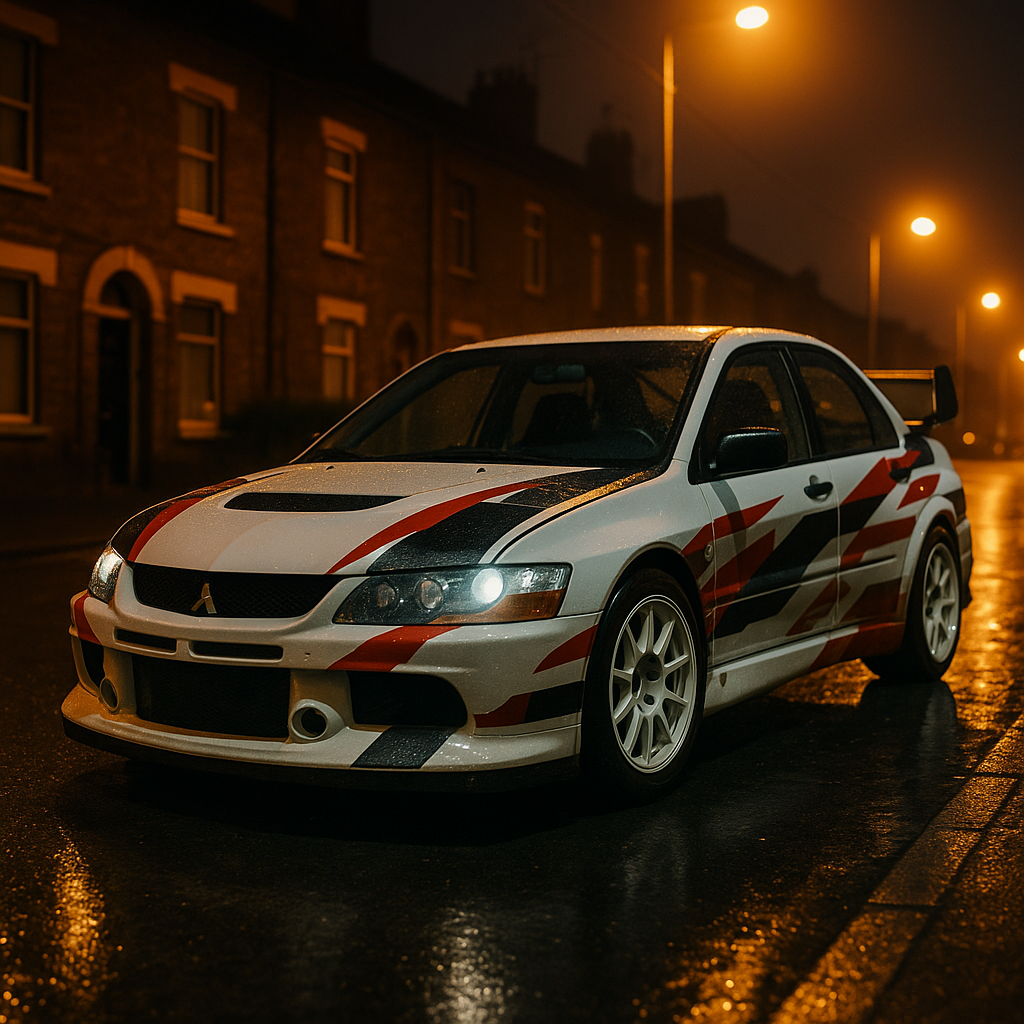
    Mitsubishi Evo IX on a wet UK street at night showing its iconic wide-arch stance

    What Makes the Mitsubishi Evo So Special?

    Let’s not overthink it. The Evo was built to win rally stages. Mitsubishi took that engineering and bolted a back seat into it. The turbocharged 2.0-litre four-cylinder engine, the legendary active yaw control, the all-wheel drive system that reads corners like it has a sixth sense: this is not a road car that cosplays as a performance machine. It is a performance machine that was legally required to have number plates.

    The Evo VIII and IX are the sweet spots for UK buyers right now. The VIII (2003-2005) brought the GSR and RS trims, a revised engine pushing around 265bhp in standard form, and a chassis that engineers at far more prestigious brands still talk about in hushed tones. The IX (2005-2007) refined everything further, adding a slightly torquier engine and improved aerodynamics. Both will lap a track faster than cars costing north of £40,000 fresh off the forecourt today. That is not nostalgia talking. That is physics.

    What Does a Good Mitsubishi Evo Actually Cost in 2026?

    Right, the real talk. A clean, unmodified Evo VIII or IX with a sensible mileage (under 100,000 miles) and a full service history is sitting somewhere between £8,000 and £14,000 at the time of writing. Sub-£10,000 examples exist, but you need to be sharp. The market has tightened considerably over the last few years as enthusiasts cottoned on to the investment potential, and tatty, over-modified examples that have been thrashed within an inch of their gearbox are inflating the lower end of that range.

    The Evo X (2008-2016) sits a bit higher in price, typically £12,000 to £20,000 for a clean example, and while it is technically the more sophisticated machine, many purists argue it lost a bit of the raw, unhinged character that made the earlier cars legendary. If you want to feel like you are co-driving for Tommi Mäkinen, the VIII and IX are your cars.

    Common Issues to Know Before You Buy

    The Evo is not a car that rewards ignorance. Buy one blind and it will punish you financially. Buy one with your eyes open and it is one of the most rewarding used cars on the market. Here is what to check.

    Engine and Turbo

    The 4G63 engine in the VIII and IX is famously tough, but only when maintained properly. Oil changes are not optional on these cars; they are survival. Look for evidence of regular servicing, ideally at a specialist. The turbo can show signs of wear if the car has been run hard on cheap oil, so check for smoke on boost and listen for any whine that does not sound right. A turbo rebuild can cost £800 to £1,500 depending on who does it.

    Gearbox and Driveline

    The five-speed manual in the VIII is strong but not indestructible. Baulky second gear is a known issue on higher-mileage examples. The all-wheel drive system and differentials need regular fluid changes, and many previous owners skip this entirely. A driveline service from a reputable Mitsubishi specialist is worth budgeting £300 to £500 for immediately after purchase.

    Rust and Body Panels

    The wide bodykit and arches that make the Evo look so aggressive are also rust traps. Check the rear arches, the sills, and under the front bumper. Japanese import examples can arrive in better body condition than UK-registered cars, but always check the import documentation carefully.

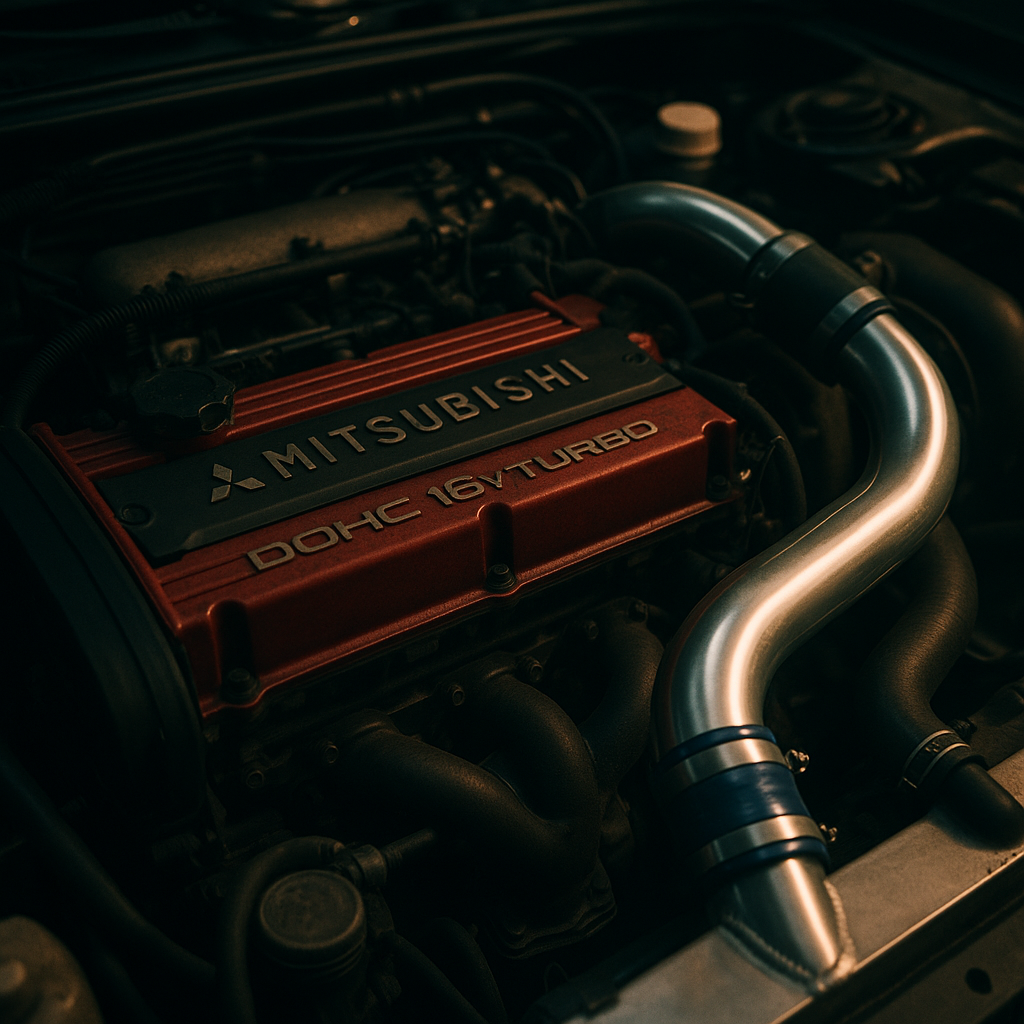
    Mitsubishi Evo turbocharged engine bay close-up detail shot

    Modifications Gone Wrong

    This is the big one. A huge proportion of Evos on the UK market have been modified, and not always well. Poorly mapped ECUs, dodgy intercooler piping, and suspension that has been slammed without any thought for geometry are all red flags. An unmolested standard car is genuinely worth a premium. If the seller mentions a “stage 2 map” in the first ten seconds, proceed with extreme caution unless you can verify exactly what has been done and by whom.

    Why It Still Murders Cars at Three Times the Price

    Here is the bit that genuinely still stuns people. An Evo IX in good nick, with even a mild tune to around 320bhp, will outhandle and outsteer a brand new hot hatch costing £35,000 to £40,000. The active yaw control system, which individually brakes wheels to rotate the car through corners, was simply ahead of its time. Modern cars have electronic systems that approximate this, but the Evo does it with a mechanical directness that electronics still struggle to replicate.

    Take it to a track day at Anglesey or Oulton Park and watch the faces of Civic Type R owners as you disappear into the distance. The Evo does not care about brand reputation or showroom shine. It cares about exit speed. That is a philosophy I have a great deal of respect for.

    The Evo also has serious aftermarket support for performance parts, which means tuning potential is essentially limitless if your budget allows. For those who are also running other Mitsubishi models alongside their Evo build, it is worth knowing that Mitsubishi outlander parts are available from specialist suppliers who know the brand inside out, which is handy if your daily driver shares the same badge as your weekend weapon.

    The Evo on the Cruise Scene in 2026

    At any serious UK cruise meet, the Evo still commands respect. It is not flashy in the way a widebody Supra is flashy. It does not have vinyl wraps or LED underbody lighting (though some do, and that is a lifestyle choice). What it has is a reputation that precedes it. Petrolheads who know cars know what an Evo represents. The wide arch stance, the bonnet scoop, the “Evolution” badging: it is the kind of car that draws a crowd of people who actually understand what they are looking at.

    According to data from the DVLA, the number of Lancer Evos registered in the UK continues to decline year on year as older examples are written off or broken for parts, which means the surviving clean examples are only going one way in value. This is not just a cool car. It is increasingly a collectible.

    Should You Actually Buy One?

    If you can find a clean example with verifiable history, at a sensible price, from someone who has not treated it like a rental car on a track day: yes. Absolutely yes. Get it inspected by a Mitsubishi specialist before you hand over any money, budget for immediate driveline and fluid maintenance, and sort the insurance properly (specialist agreed-value cover is worth exploring for modified examples).

    The Mitsubishi Evo is one of those rare machines where the hype and the reality actually match. It is raw, it is fast, it rewards commitment, and it will make you grin like an idiot every single time you give it the beans on a decent road. In a market full of sensible hot hatches with driver aids doing most of the work, that kind of unfiltered driving experience is genuinely rare. And for under £10,000? There is nothing else like it.

    Frequently Asked Questions

    Which Mitsubishi Evo is the best to buy in the UK?

    The Evo VIII and IX are widely considered the sweet spot for UK buyers. They offer the raw, mechanical driving experience the Evo is famous for, with strong aftermarket support and enough surviving examples to make finding a good one feasible. The Evo X is more refined but commands higher prices.

    How much does a Mitsubishi Evo cost to insure in the UK?

    Insurance on an Evo is not cheap. Expect to pay anywhere from £1,200 to £3,000 per year depending on your age, location, no-claims history, and the level of modification. Specialist car insurers such as Adrian Flux or Footman James often offer better rates than mainstream providers for performance cars.

    Are Mitsubishi Evo parts hard to find in the UK?

    Standard mechanical parts are generally available through Mitsubishi specialists and online suppliers, though some trim and body parts are becoming scarce. Performance aftermarket support remains excellent. Using a dedicated Mitsubishi specialist rather than a generic garage is strongly recommended for servicing and repairs.

    Is the Mitsubishi Evo a good first performance car?

    It depends on your experience level. The Evo is a highly capable machine, but it demands respect and does not forgive mistakes the way modern electronically-assisted cars do. As a first performance car for a complete beginner, it can be a steep learning curve. For someone with some driving experience and mechanical knowledge, it is an incredible entry point.

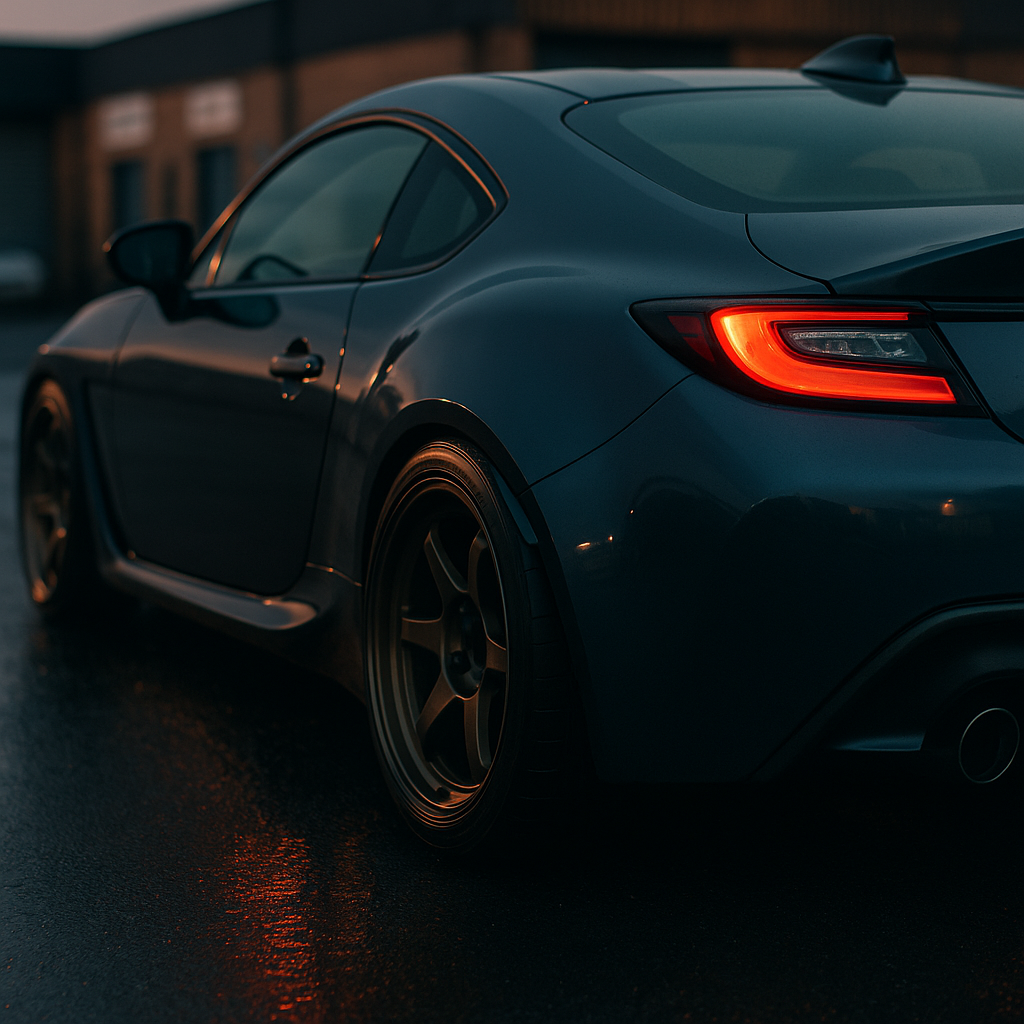
  • Toyota GR86 vs Mazda MX-5: Which Rear-Wheel Drive Icon Actually Belongs at a UK Cruise in 2026

    Toyota GR86 vs Mazda MX-5: Which Rear-Wheel Drive Icon Actually Belongs at a UK Cruise in 2026

    Right, let’s have the argument properly. Two rear-wheel drive cars, both Japanese, both absolutely beloved by the kind of people who spend their weekends arguing about tyre compounds in a Tesco car park. The GR86 vs MX-5 debate has been going on for years, but in 2026 it’s more relevant than ever because both cars have been properly updated, prices have shifted, and the cruise scene has strong opinions about which one deserves the nod at the gate.

    This isn’t a boring spec sheet rundown. You can get that anywhere. This is about which car actually makes sense if you’re building something to drive hard, look decent at a meet, and not spend your entire wage packet keeping it on the road. Let’s go.

    Toyota GR86 and Mazda MX-5 side by side at a UK cruise meet, GR86 vs MX-5 comparison

    Price: What You’re Actually Paying in 2026

    New, the Toyota GR86 sits around £32,000 for the base trim. It’s a proper coupe, proper rear-wheel drive, 2.4-litre naturally aspirated engine making around 234bhp. For a brand new driver’s car from a manufacturer with genuine motorsport credibility, that price is honestly decent. Used examples from 2022 onwards are floating around £22,000 to £27,000 depending on mileage and spec.

    The Mazda MX-5 tells a different story. A new Mazda MX-5 Sport in 2026 starts at roughly £28,000, and the RF (retractable fastback) version nudges closer to £32,000. Used MX-5 NDs from 2015 onwards can be had for as little as £12,000 for a tidy example. That’s a massive difference. If you’re on a budget and you want rear-wheel drive fun, the MX-5 is the realistic choice for a huge chunk of the UK cruise scene.

    Points to MX-5 on accessibility. But price alone doesn’t win arguments at cruise nights.

    Driving Feel: Which One Actually Gets Your Heart Rate Up

    The GR86 is heavier at around 1,270kg. The MX-5 is famously svelte at roughly 1,030kg in 1.5-litre form, and barely 1,060kg in the 2.0-litre. That weight difference is everything. The MX-5 feels alive in a way that’s genuinely hard to describe until you’ve driven one through a sequence of bends on a quiet B-road in the Peak District at seven in the morning. Every input is immediate. Every corner is a conversation.

    But the GR86 has theatre. That flat-six buzz note, the wider track, the way it builds power higher up the rev range and rewards you for committing. It’s less of a dance partner and more of a proper driving machine that demands your attention. For track day lads and people who want to drift on a quiet industrial estate (not that we’re endorsing that), the GR86 is the natural choice. Forged components, wider arches, a chassis that feels genuinely engineered rather than just lightened. If you’re also interested in serious platform builds, the same engineering philosophy carries over to why people invest in Toyota 4×4 Chassis Upgrades when they want something that handles real stress.

    Toyota GR86 rear arch and alloy wheel detail in the GR86 vs MX-5 showdown

    Tunability: Which One Has the Better Scene Behind It

    This is where things get spicy. The GR86 runs a Subaru-developed FA24 engine, and the tuning community has been getting to grips with it since the GR86 launched in its second generation. Supercharger kits from companies like HKS exist, aftermarket ECU mapping is well supported, and the chassis responds well to coilovers and geometry changes. 300bhp from a supercharged GR86 is a realistic and relatively affordable target.

    The MX-5, particularly the ND generation, has an absolutely massive UK tuning scene. Flyin’ Miata parts ship to the UK, BBR Motorsport in Brackley specialises entirely in MX-5 builds and have done for decades. Turbocharged ND MX-5s making 250bhp are not unheard of. The 1.5 and 2.0 SkyActiv engines respond well to forced induction, and the aftermarket for suspension, brakes, and aero is enormous. Motorsport culture in the UK has always had a soft spot for the MX-5 in club racing, and that community knowledge feeds directly into the road car tuning scene.

    Honestly? Tunability is close. The GR86 has slightly more dramatic potential at the top end. The MX-5 has more grassroots support and cheaper entry points into the tuning world.

    Cruise Meet Street Cred: The Real Verdict

    Here’s the honest take. Pull up to a UK cruise meet in a tastefully modified GR86 with a Cusco rear strut brace, proper coilovers, and a set of TE37s, and you will get looked at. People know what it is. People know it’s the spiritual successor to the AE86. The nameplate carries weight.

    Pull up in a clean ND MX-5 on coilovers with a subtle lip kit and a BBR exhaust note, and you also get looked at. But you’ll also get the odd smirk from the Golf GTI crowd who haven’t driven one and therefore have no idea what they’re on about. The MX-5’s image problem is entirely undeserved. It’s still, in 2026, one of the finest driver’s cars ever built. The numbers don’t lie: Mazda has sold over 1.3 million MX-5s globally since 1989, making it the world’s best-selling two-seat roadster. That legacy matters.

    At the same time, the GR86 wins the visual war. It looks more aggressive, more purposeful, more like something that belongs parked next to a Supra at a Saturday night cruise. The coupe body, the wider stance, the Toyota GR badge; these things speak a language the cruise crowd understands immediately.

    So Which One Should You Actually Buy

    If you’ve got a budget under £15,000 and you want rear-wheel drive entertainment, a clean used MX-5 ND is genuinely one of the best purchases you can make. It’s tunable, it’s reliable, it’s brilliant to drive, and the running costs are manageable. Insurance isn’t savage either, which matters when you’re under 30 and still paying off your first proper set of coilovers.

    If you can stretch to £25,000 upwards and you want a complete package that makes a statement at a cruise, the GR86 is the answer. It has the power, the stance, the badge recognition, and the chassis to back it all up. It’s the car that properly rewards commitment. Push it and it rewards you. Back off and it lets you breathe.

    The GR86 wins the cruise gate vote. The MX-5 wins the Sunday morning B-road vote. Both of them embarrass far more expensive machinery when the road gets twisty. Own either with genuine modifications and you’ve earned your spot at any meet in the country.

    Frequently Asked Questions

    Is the Toyota GR86 or Mazda MX-5 faster on a track day?

    The GR86 generally posts quicker lap times on track due to its higher power output (234bhp vs 184bhp in the 2.0 MX-5) and wider track width. However, the MX-5’s lighter weight means it’s often faster through technical sections, and many experienced drivers prefer its more tactile feel at the limit.

    How much does it cost to insure a GR86 or MX-5 as a young driver in the UK?

    Both cars fall into higher insurance groups, but the MX-5 is typically cheaper to insure, often sitting around insurance group 28-32 depending on trim. The GR86 tends to sit in group 35-40. For drivers under 25, expect annual premiums of £1,500 to £2,500+ depending on location and no-claims history.

    Can you daily drive a Mazda MX-5 in the UK?

    Yes, absolutely. The ND MX-5 is one of the most practical roadsters ever made for UK conditions. Boot space is tight at 130 litres, but the roof mechanism is fast, the heater is strong, and the ride quality is perfectly acceptable for commuting. Many owners daily drive them year-round.

    Which is easier to modify, the GR86 or MX-5?

    The MX-5 has a larger and more established UK aftermarket, with specialists like BBR Motorsport offering off-the-shelf power upgrades and suspension packages. The GR86 has a growing scene with supercharger kits and forged engine builds becoming more common, but MX-5 parts are generally cheaper and easier to source in Britain.

    Is the GR86 good value compared to the MX-5 in 2026?

    At around £32,000 new, the GR86 offers strong value for a purpose-built driver’s car with genuine performance credentials. The MX-5 starts at £28,000 new but the real value is in the used market, where clean ND examples can be found from around £12,000. For pure pound-per-smile ratio, a used MX-5 is hard to beat.

  • The Rise of UK Drift Culture: From Niche Track Day to Full-Blown Lifestyle

    The Rise of UK Drift Culture: From Niche Track Day to Full-Blown Lifestyle

    Something shifted in the British car scene over the past few years, and it wasn’t just the rear end of a knackered S14 at Teesside Autodrome. UK drift culture has gone from a handful of lads watching Initial D on a dodgy DVD player to a genuine, structured, absolutely obsessive lifestyle movement that’s pulling in tens of thousands of people every season. Track days, grassroots practice sessions, club championships, full-on Pro-Drift rounds with actual crowds. It’s here, it’s loud, and it smells of burnt Nankang tyres.

    If you’ve been sleeping on it, now’s the time to wake up. This is what’s happening, how it got here, and how you can be part of it without selling a kidney on the high street.

    Modified Nissan S14 drifting sideways at a UK drift culture event with heavy tyre smoke
    Modified Nissan S14 drifting sideways at a UK drift culture event with heavy tyre smoke

    How UK Drift Culture Actually Got This Big

    Drifting arrived in the UK mostly through motorsport media and import culture in the early 2000s, but it stayed underground for a long time. The circuits weren’t set up for it, insurance was a nightmare, and the mainstream motorsport crowd looked at it sideways (pun absolutely intended). A few dedicated souls kept it alive through unofficial practice sessions on industrial estates and the occasional closed-road event, but it was niche. Properly niche.

    What changed everything was the grassroots scene getting organised. Clubs like Japfest, Driftcon, and the British Drift Championship gave the community an anchor. Suddenly there were proper event calendars, rulebooks, and affordable entry categories designed for blokes running a £1,500 Nissan 200SX rather than a fully built competition car. Social media did the rest. Clips of locals absolutely sending it on a wet airfield in Yorkshire got millions of views. People who’d never considered motorsport were obsessed.

    The British Drift Championship, which runs events at venues including Lydden Hill, Knockhill, and Rockingham (RIP, but the memories live on), now attracts full Pro-Am grids and healthy spectator numbers. According to the Motorsport UK governing body, grassroots participation in competition disciplines has grown consistently since 2020, and drift sits firmly among the fastest-growing categories. That’s not an accident.

    Grassroots Drift Practice: Where It Actually Starts

    You don’t walk into a Pro drift event on day one. The real entry point is a practice session, and that’s where UK drift culture lives and breathes. Venues like Teesside Motorsport Park, Unit 1 Motorsports Park in Gloucester, and Blyton Park in Lincolnshire run regular drift days from around £100 to £180 for a full day of controlled sliding madness. Some sessions are specifically for beginners, where instructors will ride along and stop you doing anything too catastrophic.

    The format is usually simple. You pay your entry, scrutineers check your car meets the basic safety requirements (roll cage isn’t always compulsory at beginner level, but a harness and helmet are non-negotiable), and then you go out in groups and work on transitions, angle, and line. No one’s laughing at the novice who spins it on lap one. Well, a bit. But constructively.

    The community at these sessions is genuinely decent. Borrowed tools, shared knowledge, someone always turns up with a spare prop shaft that fits your exact application. It’s the kind of atmosphere that makes you realise motorsport at grassroots level is still fundamentally about people who love cars helping each other go sideways.

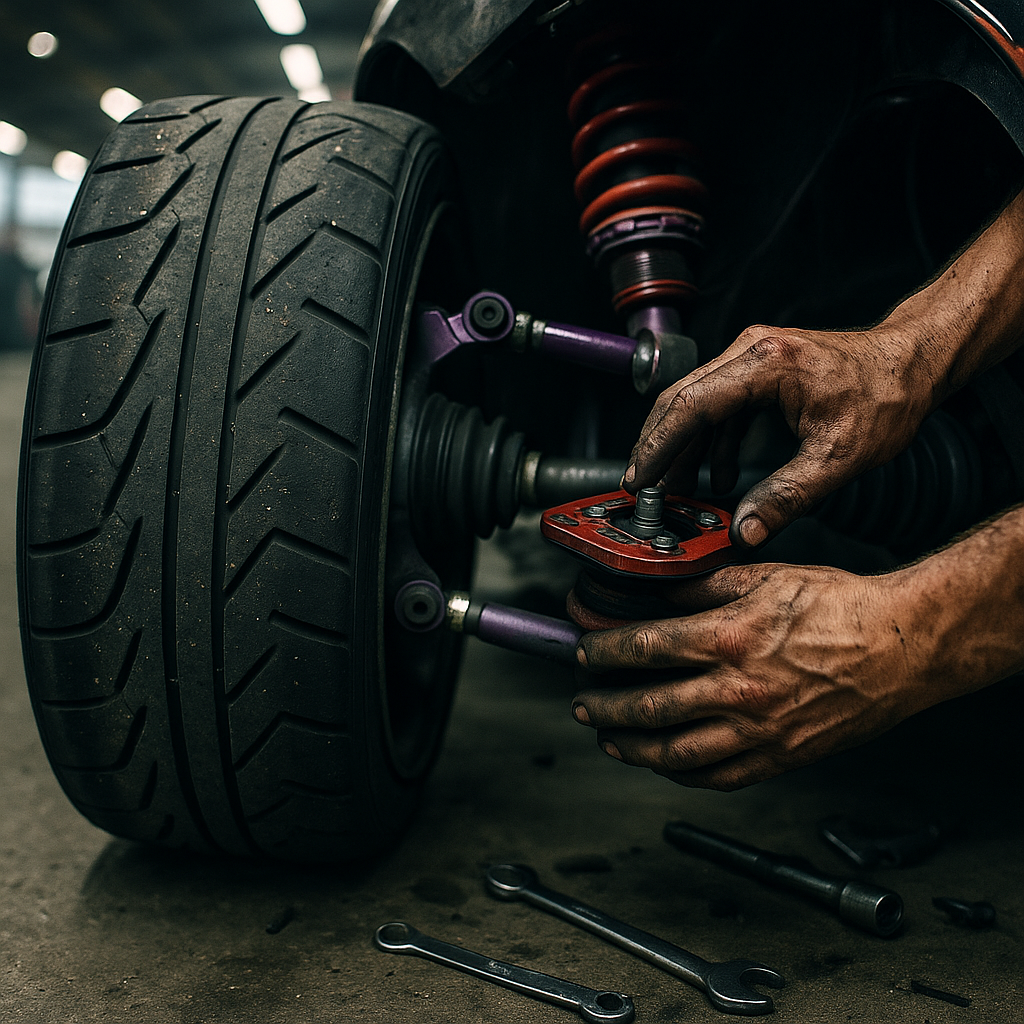
    Close-up of UK drift culture car suspension setup in paddock during drift event preparation
    Close-up of UK drift culture car suspension setup in paddock during drift event preparation

    The Budget Drift Car Scene: What You’re Actually Running

    Here’s the bit that surprises people. You don’t need a £10,000 build to get started. UK drift culture at grassroots level runs on affordable, rear-wheel-drive Japanese metal, and there’s plenty of it about if you know where to look.

    The Nissan S-chassis cars (S13, S14, S15) remain the absolute backbone of the scene. Predictable oversteer, easy to find parts for, strong aftermarket support. A tidy S14 Kouki can still be found for under £4,000 if you’re patient on the Facebook groups. The Toyota Soarer, the Mazda MX-5, and even the old BMW E36 have loyal drift followings too.

    Then there’s the old Toyota Hilux Surf and related 4×4 platforms, which bring us neatly to the point that running older Japanese machinery requires a decent parts supply. If you’re keeping a period Toyota on the road or track, sourcing quality components matters. Plenty of enthusiasts pick up Toyota Amazon parts to keep donor vehicles running while they strip and convert the main drift project. It’s that kind of resourceful, make-it-work mentality that defines the grassroots scene.

    Budget realistically? A solid starter drift car: £1,500 to £3,500. Basic safety gear (helmet, harness, fire extinguisher): £300 to £500. First season of practice days: roughly £600 to £900. Total? You’re into it for under £5,000 and having the best time of your life. Compare that to club circuit racing and it’s genuinely accessible.

    Club Events and the Competition Ladder

    Once you’ve got the basics sorted at practice days, the natural step is club-level competition. The British Drift Championship’s Pro-Am and Semi-Pro categories are specifically designed as stepping stones, running judged tandem and solo events across the UK. Points series mean you’re working towards something. The judging criteria (angle, line, speed, proximity in tandems) are clearly defined, which makes it easier to understand what you’re working towards rather than just going fast and hoping for the best.

    Beyond the BDC, there’s the Prodrift UK series and various regional championship events that give you competitive structure without the pressure of national finals. Scottish Motorsport runs events at Knockhill that attract a strong northern contingent. Wales has Anglesey Circuit, which is spectacular if you ever get a chance to drift the coastal layout. These aren’t aspirational pipe dreams either. These are events you can realistically be competing in within your first or second season if you’ve put the practice in.

    Why the Lifestyle Element Matters

    UK drift culture isn’t just about the driving. Anyone who’s been to a drift event knows that half the experience is the paddock. The builds on display, the conversations, the cursing at hydraulic handbrakes that packed up on the warm-up lap. Car meets that orbit drift events have their own flavour. More stance, more fabrication, more genuine mechanical obsession than your average Friday night cruise.

    The content side has exploded too. UK drifters documenting their builds on YouTube and TikTok are pulling serious numbers. Channels dedicated to budget builds, engine swaps, and competition prep have shown a whole generation that you don’t need a TV deal or corporate sponsorship to live this life. You need a welder, some patience, and the ability to laugh when things go wrong in spectacular fashion.

    Getting Started With UK Drifting: The Practical Bit

    If this has you itching to get involved, here’s the shortest possible roadmap. Get yourself a suitable rear-wheel-drive car. Check the Motorsport UK regulations for any club or competition you want to enter, as safety requirements vary by event level. Book a beginner drift day at one of the dedicated venues. Go with zero ego and maximum willingness to learn. Join the communities online, specifically the BDC forums and UK Drift Facebook groups, where people post event listings, car-for-sale threads, and genuine build advice.

    The scene will do the rest. UK drift culture has a habit of pulling people in and not letting go. Once you’ve felt proper rear-end rotation on a circuit with people actually cheering you on, a standard commute is never quite the same again.

    Frequently Asked Questions

    How much does it cost to get into drifting in the UK?

    Getting started realistically costs between £2,000 and £5,000 all in. That covers a basic rear-wheel-drive project car, essential safety equipment like a helmet and harness, and a handful of practice day entries to build your skills.

    What are the best drift cars for beginners in the UK?

    The Nissan S13 and S14 are the most popular beginner choices due to their affordable price, predictable handling, and massive aftermarket parts availability. The Mazda MX-5 and BMW E36 are also widely recommended for their balance and accessibility.

    Is drifting legal on public roads in the UK?

    No. Drifting on public roads is illegal and carries serious consequences including points, fines, and vehicle seizure under the Road Traffic Act. All legitimate drifting takes place at licensed venues, track days, and organised motorsport events.

    Where can I practice drifting in the UK?

    Popular drift practice venues include Teesside Motorsport Park, Unit 1 Motorsports Park in Gloucester, Blyton Park in Lincolnshire, and Knockhill in Scotland. Most run regular beginner and open practice sessions bookable online.

    What is the British Drift Championship and how do I enter?

    The British Drift Championship (BDC) is the UK’s main organised drift competition series, running multiple categories from grassroots semi-pro through to professional level. You can enter through the official BDC website, where entry criteria, safety regulations, and event calendars are published each season.

  • Stance vs Performance: Which Car Culture Actually Wins in 2026?

    Stance vs Performance: Which Car Culture Actually Wins in 2026?

    Right then. The debate that has started more arguments in a McDonald’s car park than any other topic in UK car culture. Stance vs performance cars. Two tribes, two very different philosophies, and absolutely zero chance of a peaceful resolution any time soon. One side wants to scrape the tarmac on coilovers so aggressive the car physically cannot enter a multi-storey car park. The other side wants lap times, data logs, and the kind of corner speed that makes their passenger question every life decision they have ever made. Both are brilliant. Both have their issues. Let’s have it out properly.

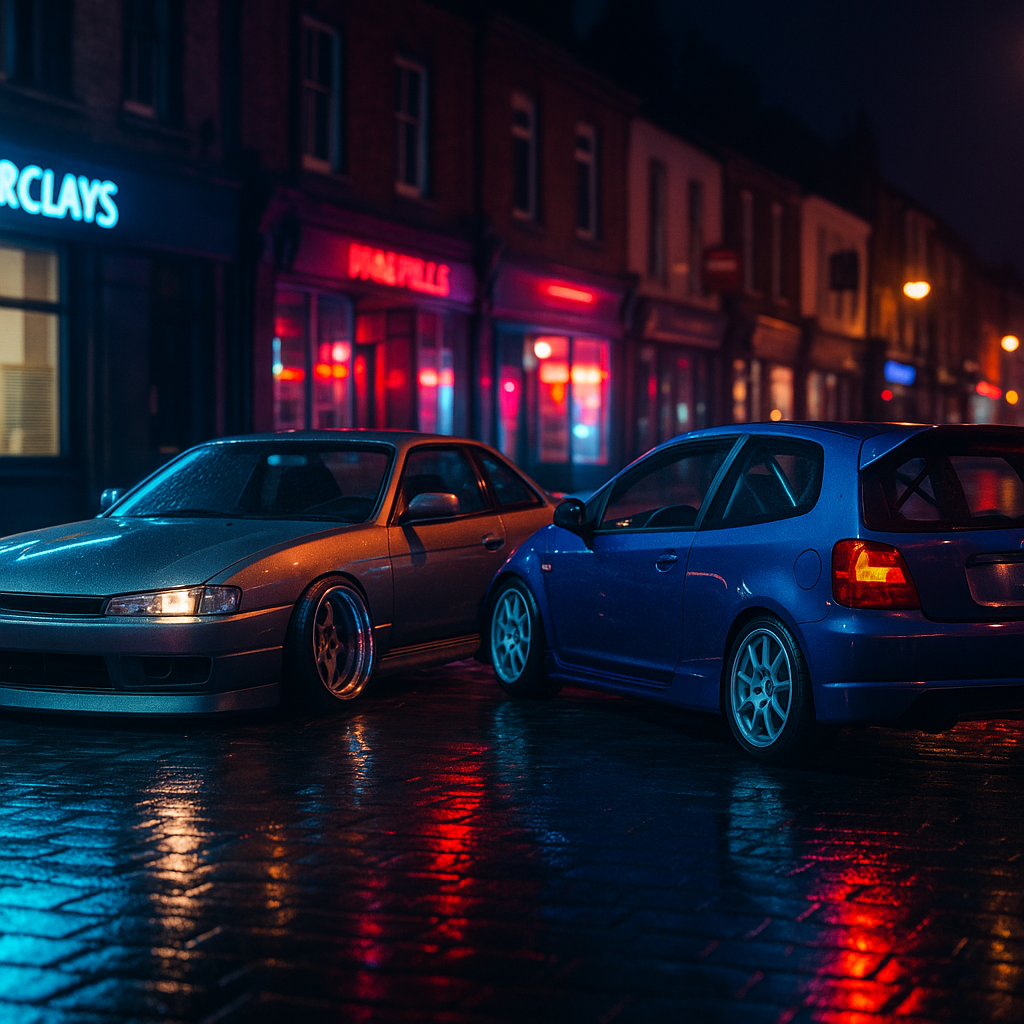
    Stance vs performance cars side by side on a British street at night
    Stance vs performance cars side by side on a British street at night

    What Do We Actually Mean by Stance Culture?

    Stance is about aesthetics, full stop. The goal is a car that looks absolutely filthy when it pulls up at a meet. Stretched tyres, aggressive camber, the widest wheels you can physically squeeze under those arches, and a ride height that makes speed bumps a genuine moral dilemma. The community has deep roots in Japanese and European car culture, and it exploded across UK cruise meets throughout the 2010s. Walk around any big show in 2026 and you will still find rows of slammed Golfs, stretched Civics, and air-bagged BMWs sitting on the floor looking like they belong in a magazine rather than on the A34.

    Stance builds are labour-intensive, expensive, and deeply personal. A proper set of coilovers from a brand like KW or BC Racing is not cheap. Add custom wheels, stretched rubber, camber arms, and a respray, and you are looking at serious money. But the payoff at a meet? Unreal. There is nothing quite like pulling into a cruise night on a slammed FK8 with the crowd parting. That is the whole point. It is a rolling piece of art.

    What Does Performance Culture Actually Look Like in 2026?

    On the other side of the car park, the performance crowd is obsessing over something completely different. They want the car to go faster, stop shorter, and corner harder than it did when it rolled out of the factory. We are talking coilovers set for handling rather than height, quality brake pads, fast road tyres, an uprated intercooler, and maybe a remap to extract every last bit of power from the engine. The track day scene in the UK has grown massively, with circuits like Brands Hatch, Silverstone, and Cadwell Park filling up quicker than ever.

    Performance builds are judged on results. Lap times. 0-60 runs. Brake fade at the end of the back straight. It is a different kind of pride, more data-driven and arguably more stressful because you cannot hide behind visual appeal when you are getting overtaken by a bone-stock Clio on track. The performance crowd tends to buy less flashy but better quality parts, prioritising function over form. Their cars might look standard from fifty metres away but they will absolutely destroy you in a corner.

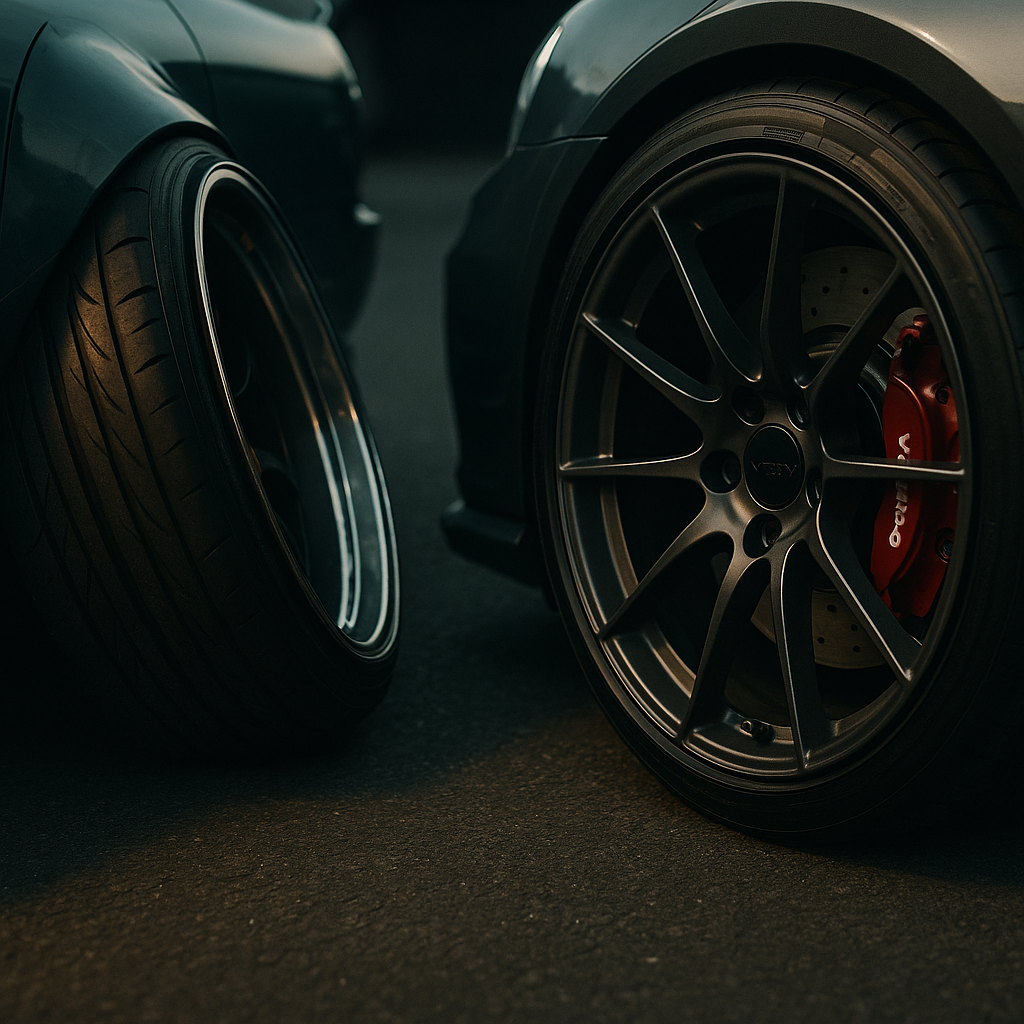
    Stance car wheel versus performance car brake setup in stance vs performance cars comparison
    Stance car wheel versus performance car brake setup in stance vs performance cars comparison

    The Real Problems with Each Side

    Why Stance Builds Frustrate People

    Let’s be honest about the downsides. A car set up purely for stance is, in most cases, genuinely worse to drive than standard. Extreme camber destroys tyre wear and seriously compromises braking performance. Ride height so low it barely clears a painted speed bump is not exactly practical on British roads, which, as anyone who has driven the M6 or a rural B-road in Lancashire will confirm, are absolutely dreadful. There is also the MOT issue. Excessive negative camber and stretched tyres have failed many a build at the local test centre, and the UK government’s vehicle approval standards do not care how good your car looks on Instagram. Stance can also attract the wrong kind of attention from the police, especially at cruise meets where enforcement has tightened up significantly.

    Why Performance Builds Have Their Own Baggage

    Performance culture is not without its own issues. A stripped-out track weapon with a roll cage and semi-slick tyres is not exactly something you want to commute to work in on a wet Tuesday morning in November. There is also the cost spiral. Once you start chasing lap times, there is always something else to upgrade. New brakes, then new pads, then braided lines, then a big brake kit, then someone tells you your dampers are the limiting factor. It never ends. And for all the technical satisfaction it brings, a performance-focused car at a cruise meet often gets overlooked next to a slammed show piece that catches every eye in the car park. The crowd at cruise nights tend to react to visuals first and specs second, which can be quietly frustrating for the performance builder.

    Can You Actually Have Both? The Daily That Does Everything

    Here is where things get interesting. The best builds in UK car culture in 2026 are the ones that refuse to pick a side. A properly set up Subaru Impreza WRX STI on a good set of coilovers at a sensible ride height, wide arches, tasteful wheels, and a solid tune is both eye-catching and genuinely fast. Same goes for a well-built Ford Focus ST, a Mitsubishi Evo, or a Golf R running quality suspension at a road-legal height with a decent remap. These cars look the part at a meet and can hold their own at a track day. That sweet spot exists, it just takes more skill, more research, and more self-restraint than going all-in on either extreme.

    The stance vs performance cars argument often ignores this middle ground, probably because nuance is less fun to argue about in a Greggs car park at midnight. But the hybrid approach genuinely produces the most versatile, impressive, and respect-earning builds in the scene right now.

    Where Does the UK Cruise Scene Actually Stand on This?

    UK cruise culture has always leaned visual. The roots are in show and shine, in turning up and turning heads. But the scene is maturing. More enthusiasts than ever are hitting track days alongside cruise meets, and the conversation around builds has got more technical and more nuanced as a result. Social media helps, as channels dedicated to both stance and performance have massive UK followings, and the cross-pollination of ideas is genuinely pushing builds in a more well-rounded direction.

    In 2026, the most respected builders in the UK scene tend to be the ones who understand both sides. They know their suspension geometry, they know their wheel fitment, and they know the difference between a spring rate that looks cool in a photo and one that actually works on a wet B-road. Respecting both cultures, rather than dismissing one entirely, is where the real knowledge sits.

    So Who Actually Wins the Stance vs Performance Debate?

    Nobody. And everybody. Stance culture wins at the meet, under the lights, with a crowd around the car. Performance culture wins on track, in the data, and when the roads open up. The car culture war between stance and performance will never be settled because they are measuring success by completely different standards. What you choose says more about you and how you enjoy your car than it does about which approach is objectively better. And frankly, both are a thousand times more interesting than a stock car sitting in a supermarket car park.

    Pick your side. Or better yet, build something that makes both sides have to admit you know what you are doing. That is the real flex.

    Frequently Asked Questions

    What is the difference between a stance build and a performance build?

    A stance build prioritises aesthetics, focusing on ride height, wheel fitment, camber, and visual impact at shows and cruise meets. A performance build prioritises how the car actually drives, targeting faster lap times, better handling, and improved braking through functional upgrades like quality coilovers, brake pads, and engine tuning.

    Are stance cars legal on UK roads?

    It depends on how extreme the modifications are. Excessive negative camber, stretched tyres, and ride heights that reduce ground clearance below legal minimums can all cause an MOT failure. UK vehicle standards require modifications to be roadworthy and safe, so extreme stance builds often struggle with annual testing.

    Can a stance car be used on a track day?

    Technically yes, but heavily stanced cars are not well-suited to track use. Extreme camber reduces straight-line braking performance, stretched tyres can delaminate at speed, and very low ride height causes ground clearance issues on circuit kerbs. Most track day venues in the UK will scrutineer your car and may turn you away if safety is a concern.

    How much does a proper performance car build cost in the UK?

    A solid entry-level performance build, covering a remap, quality coilovers, uprated brakes, and fast road tyres on a car like a Focus ST or Civic Type R, typically costs between £2,000 and £6,000 on top of the car purchase price. Serious track builds with roll cages, harnesses, and big brake kits can push well beyond £15,000.

    Which is more popular at UK car meets in 2026, stance or performance?

    Stance and show-focused builds still draw the biggest crowds at UK cruise meets and car shows, as visual impact is immediately rewarding and accessible. However, performance culture is growing rapidly thanks to the expanded track day scene, with many enthusiasts now pursuing builds that balance both aesthetics and real-world driving ability.

  • JDM vs Euro: Which Import Car Culture Dominates the UK Cruise Scene in 2026?

    JDM vs Euro: Which Import Car Culture Dominates the UK Cruise Scene in 2026?

    Right, let’s settle this once and for all. The great divide of UK car culture, the argument that’s been going on in car park meets, WhatsApp groups and YouTube comment sections for the better part of two decades. JDM vs Euro car culture. Which side is actually running things on the UK cruise scene in 2026? Not which side has the best keyboard warriors, but which culture is genuinely dominating the meets, the modifications, the social feeds and the hearts of British petrolheads right now. Buckle up.

    To be clear, this isn’t about which cars are faster on paper. It’s about culture, community, style and vibes. Both sides bring serious heat. But only one is having a proper moment right now, and we’re going to work out which one it is.

    JDM vs Euro car culture showdown at a UK nighttime cruise meet with modified cars lined up
    JDM vs Euro car culture showdown at a UK nighttime cruise meet with modified cars lined up

    The JDM Side: Legends, Legacy and Low Offsets

    Japanese domestic market culture in the UK has roots going back to the late 90s. The Fast and the Furious put Supras and Silvias on the radar of a generation, but British petrolheads had already been clocking the grey imports rolling off boats at Southampton docks well before Hollywood got involved. In 2026, the JDM scene is still going absolutely mental.

    Walk into any decent cruise night from Bristol to Bradford and you’ll see a sea of Civics, Imprezas, Evos, RX-7s, S-chassis Nissans and the odd immaculate Aristo or Chaser that someone clearly re-mortgaged their soul to import. The JDM crowd takes modification seriously. We’re talking full aero kits, genuine BBS or Enkei wheels, Cusco suspension, Bride buckets, full engine rebuilds and custom fabrication that would make a welder blush.

    On social media, the numbers speak for themselves. JDM-tagged content dominates TikTok and Instagram in the UK car space. Accounts dedicated to British JDM builds rack up hundreds of thousands of followers, and events like the JDM Legends Show pull massive crowds year after year. The culture has genuine depth, genuine history and a global community that amplifies every single UK build to an international audience.

    The modification scene around JDM cars is also a proper industry in this country. Tuning specialists in places like Birmingham, Manchester and Glasgow have built entire businesses around importing and modifying Japanese metal. And if you’re spannering your way through a project, you’re never short of parts sources, whether you’re hunting for coilovers for an Evo or tracking down Mitsubishi l200 parts for a tougher workhorse project alongside your weekend show car.

    The Euro Side: Refined, Rapid and Ruthlessly Cool

    Now don’t sleep on the European hot hatch and modified Euro scene, because it is absolutely not playing second fiddle in 2026. In fact, in certain circles it’s never been more dominant. The Golf GTI and Golf R still shift units like nobody’s business, the Audi S3 is basically the default cruiser for anyone who wants performance without looking like they’re trying too hard, and the Focus ST and RS community is as passionate as any JDM crew you’ll find.

    But it goes deeper than the obvious stuff. The VAG scene in the UK is massive. VWDRC, Players Classic, Volksfling and countless regional Euro meets pull in builds that rival anything the JDM world can throw up. We’re talking bagged Golfs sitting on air-ride with custom interiors that look like they belong in a magazine, widebody Polos on RS4 wheels, and tucked-up Seats that scrape the tarmac at every speed bump. The Euro scene has a particular obsession with fitment, stance and detail that honestly goes unmatched.

    The scene has also benefitted from the massive growth in German-car specific tuning culture. Revo, Milltek, Wagner Tuning, APR and others have turned the UK Euro tuning world into a genuine powerhouse. A Stage 2 Golf R making 380bhp on a relatively modest budget is a real and attainable thing. That accessibility has brought loads of new enthusiasts into the Euro fold.

    Modified JDM engine bay showcasing tuning parts central to JDM vs Euro car culture builds
    Modified JDM engine bay showcasing tuning parts central to JDM vs Euro car culture builds

    What Are UK Car Meets Actually Showing in 2026?

    Here’s where it gets interesting. Spend enough time attending cruise meets around the UK and you start to notice patterns. In the North, particularly around Manchester, Leeds and Sheffield, JDM culture runs deep. You’ll see rows of Silvias, EK and EP Civics, Imprezas with full WRC-style wide arches and the occasional mental RB-swapped something that defies all logic. The Northern scene has a rawness to it that absolutely slaps.

    Down South, especially around London, the M25 corridor and the Home Counties, Euro culture has a stronger grip. The car park at a late-night south London cruise can look like a showroom floor for modified Volkswagen Group products. Pristine, detailed and social-media ready. There’s also a strong overlap with the premium scene, with AMGs and M-cars bridging the gap between the Euro enthusiast world and the general supercar crowd.

    Nationwide events like Japfest at Silverstone, which consistently draws tens of thousands of visitors, show the raw pulling power of the JDM scene. But Players Classic at Goodwood circuit and the various Euro-specific shows pack their own serious crowds. According to data from BBC coverage of major automotive events, UK car culture gatherings as a whole have seen significant growth in attendance post-2023, and both sides are benefitting from that wave.

    Social Media and the Clout War

    On TikTok and Instagram, both camps are thriving but in different ways. JDM content trends hard when something wild happens, an RB26-swapped 180SX pulls a massive flame, an EK9 gets a full cage and roll-cage spec build revealed, a bone-stock Chaser import gets a walkround from a UK creator with half a million followers. These moments go viral because they tap into nostalgia, aspiration and raw mechanical drama all at once.

    Euro content tends to do better in the detail and aesthetic lane. A beautifully shot MK7 Golf R on a misty morning on the B-roads of the Peak District? That’s going to rack up saves on Instagram for weeks. The Euro scene understands content creation on a slightly more refined level, and that suits the algorithm well.

    The honest answer is that neither side is losing the social media war. They’re just winning at different things.

    So Which Culture Actually Dominates the UK in 2026?

    Look, if you’re forcing me to pick a winner right now, today, in 2026? The JDM scene has the numbers, the events, the heritage and the raw passion. Japfest, JDM Legends, Trax and dozens of regional Japanese car shows pull bigger and more dedicated crowds than their Euro equivalents. The modification culture around JDM cars is simply more adventurous, more theatrical and more likely to produce something genuinely bonkers that breaks the internet.

    But the Euro scene is tighter, more polished and arguably more accessible to newcomers. A young lad on a budget can buy a £3,000 Focus ST, do a Stage 1 map, throw some coilovers on it and walk into any Euro meet with his head held high. That accessibility is keeping the scene incredibly healthy and consistently recruiting new blood.

    The real truth? UK car culture in 2026 is richer precisely because both tribes exist, argue and occasionally park next to each other at 11pm in a Morrisons car park arguing about who’s got the better exhaust note. And honestly, that’s exactly where we all want to be.

    JDM or Euro, pick your side, build your car and show up. The meet isn’t going to fill itself.

    Frequently Asked Questions

    What is JDM car culture in the UK?

    JDM stands for Japanese Domestic Market and refers to cars originally built for the Japanese home market, many of which were grey-imported into the UK. The culture around them includes modification, tuning, community meets and a deep appreciation for iconic Japanese performance cars like the Nissan Silvia, Subaru Impreza and Mitsubishi Evo.

    Which is more popular at UK car meets, JDM or Euro cars?

    It genuinely depends on the region. Northern cities like Manchester and Leeds tend to have stronger JDM representation, while London and the South often see more Euro-influenced builds. Nationally, dedicated JDM events like Japfest pull enormous crowds, but the Euro VAG scene has massive loyal followings too.

    Are JDM cars expensive to modify in the UK?

    Costs vary wildly depending on the platform. Entry-level JDM builds like a Honda Civic EK or Nissan 200SX can be modified fairly affordably, but rarer Japanese imports like an R34 Skyline or FD RX-7 will demand serious money for both parts and specialist labour. Parts availability has improved massively thanks to online suppliers and dedicated importers.

    What Euro cars are most popular at UK cruise meets in 2026?

    The Golf GTI and Golf R remain the backbone of the Euro cruise scene in the UK, alongside the Audi S3, Ford Focus ST and RS, and various modified VAG group products from Seat and Skoda. Stance and fitment builds on Volkswagen platforms are particularly dominant at dedicated Euro shows.

    Are car cruise meets legal in the UK?

    Organised cruise meets held on private land with permission are perfectly legal. It’s specific behaviours like racing, dangerous driving or blocking public roads that can draw police attention and Anti-Social Behaviour Orders under UK law. Most well-run meets operate within the law and have marshals or organisers managing the crowd.