
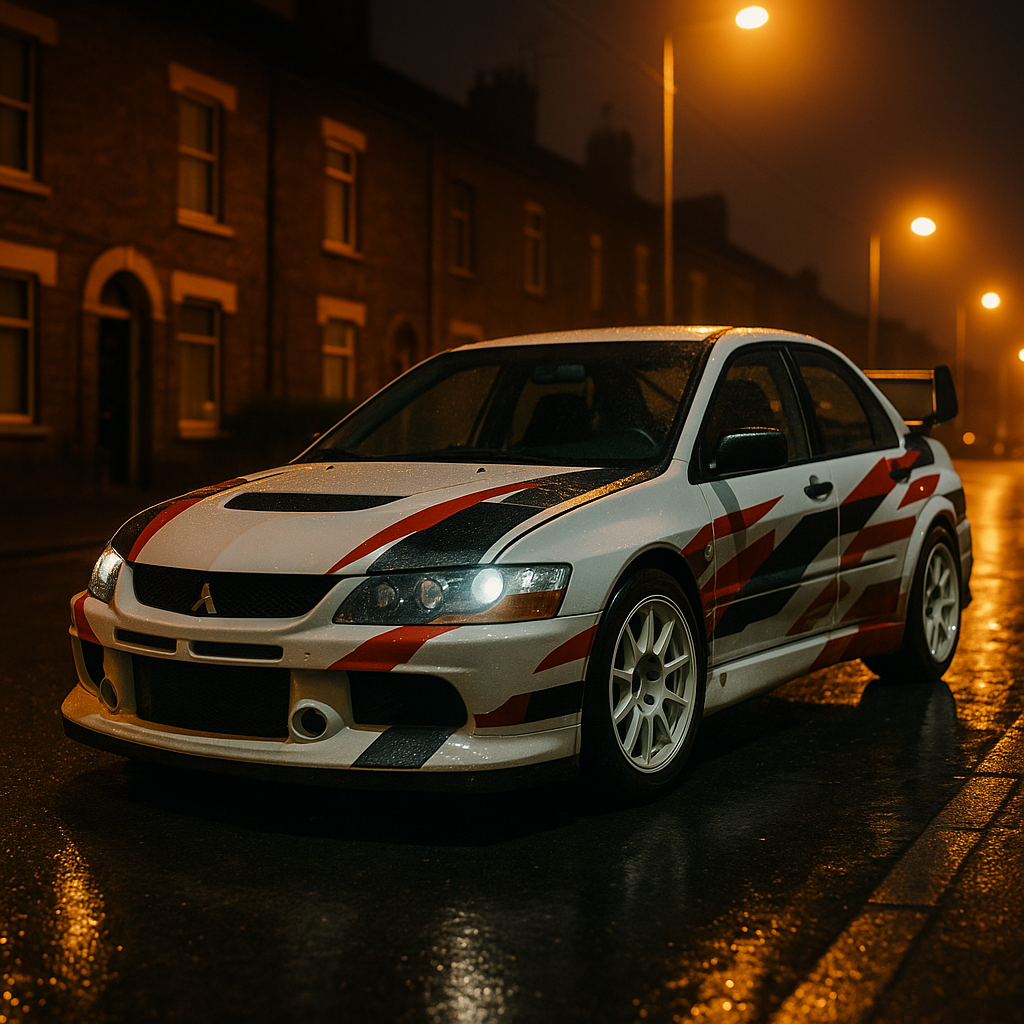
There are fast cars. There are cheap fast cars. And then there is the Mitsubishi Evo, a Japanese rally weapon that somehow ended up on British roads in numbers large enough that you can still pick one up for the price of a decent second-hand Fiesta ST. Except, you know, one of them will rearrange your internal organs on a B-road and the other will not.
In 2026, the Evo should probably be irrelevant. It stopped production in 2016. Parts are not exactly popping up at your local Halfords. Insurance companies hear the word “Lancer” and immediately start sweating. And yet, every cruise night from Bristol to Bradford, there is always at least one Evo in the car park, low, wide-arched, and making everyone else feel a bit self-conscious about their mildly chipped Cupra. The question is: why does it still hit so hard, and should you actually buy one?
What Makes the Mitsubishi Evo So Special?
Let’s not overthink it. The Evo was built to win rally stages. Mitsubishi took that engineering and bolted a back seat into it. The turbocharged 2.0-litre four-cylinder engine, the legendary active yaw control, the all-wheel drive system that reads corners like it has a sixth sense: this is not a road car that cosplays as a performance machine. It is a performance machine that was legally required to have number plates.
The Evo VIII and IX are the sweet spots for UK buyers right now. The VIII (2003-2005) brought the GSR and RS trims, a revised engine pushing around 265bhp in standard form, and a chassis that engineers at far more prestigious brands still talk about in hushed tones. The IX (2005-2007) refined everything further, adding a slightly torquier engine and improved aerodynamics. Both will lap a track faster than cars costing north of £40,000 fresh off the forecourt today. That is not nostalgia talking. That is physics.
What Does a Good Mitsubishi Evo Actually Cost in 2026?
Right, the real talk. A clean, unmodified Evo VIII or IX with a sensible mileage (under 100,000 miles) and a full service history is sitting somewhere between £8,000 and £14,000 at the time of writing. Sub-£10,000 examples exist, but you need to be sharp. The market has tightened considerably over the last few years as enthusiasts cottoned on to the investment potential, and tatty, over-modified examples that have been thrashed within an inch of their gearbox are inflating the lower end of that range.
The Evo X (2008-2016) sits a bit higher in price, typically £12,000 to £20,000 for a clean example, and while it is technically the more sophisticated machine, many purists argue it lost a bit of the raw, unhinged character that made the earlier cars legendary. If you want to feel like you are co-driving for Tommi Mäkinen, the VIII and IX are your cars.
Common Issues to Know Before You Buy
The Evo is not a car that rewards ignorance. Buy one blind and it will punish you financially. Buy one with your eyes open and it is one of the most rewarding used cars on the market. Here is what to check.
Engine and Turbo
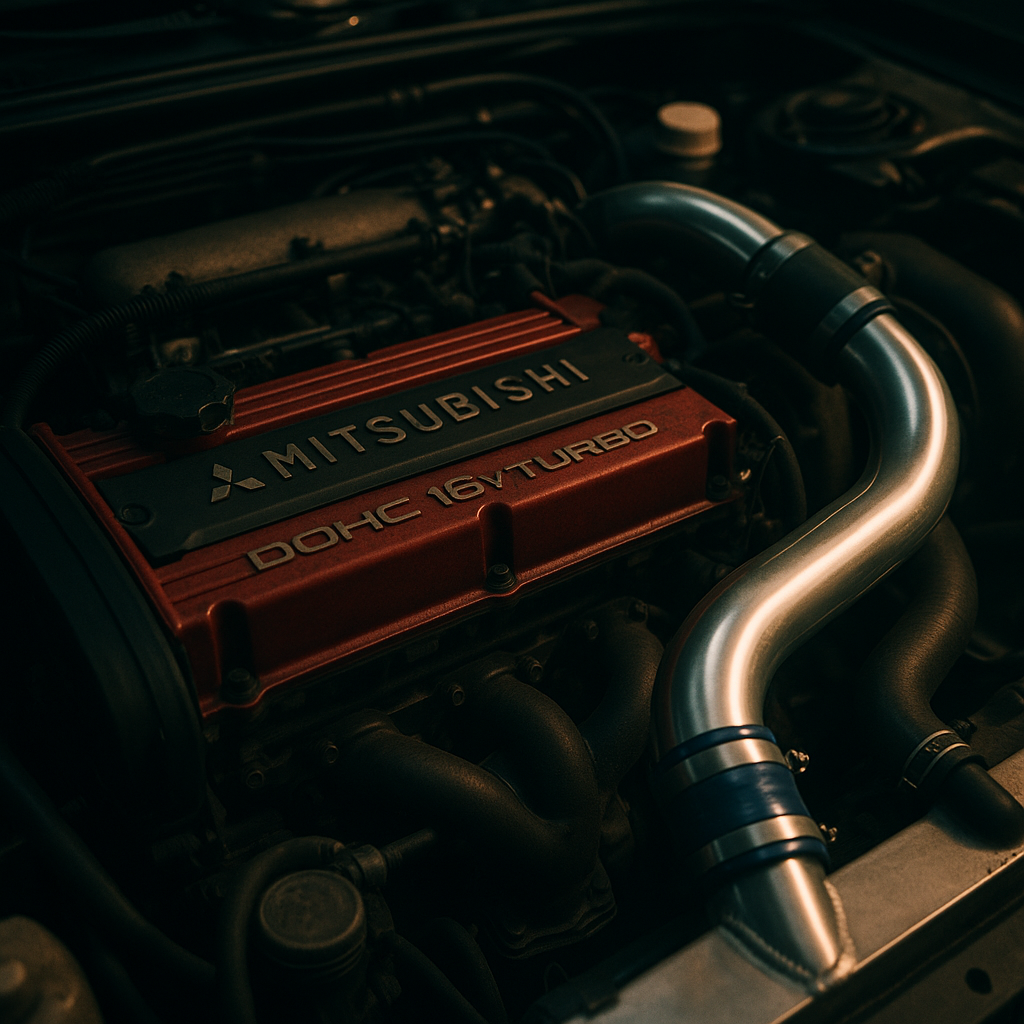
The 4G63 engine in the VIII and IX is famously tough, but only when maintained properly. Oil changes are not optional on these cars; they are survival. Look for evidence of regular servicing, ideally at a specialist. The turbo can show signs of wear if the car has been run hard on cheap oil, so check for smoke on boost and listen for any whine that does not sound right. A turbo rebuild can cost £800 to £1,500 depending on who does it.
Gearbox and Driveline
The five-speed manual in the VIII is strong but not indestructible. Baulky second gear is a known issue on higher-mileage examples. The all-wheel drive system and differentials need regular fluid changes, and many previous owners skip this entirely. A driveline service from a reputable Mitsubishi specialist is worth budgeting £300 to £500 for immediately after purchase.
Rust and Body Panels
The wide bodykit and arches that make the Evo look so aggressive are also rust traps. Check the rear arches, the sills, and under the front bumper. Japanese import examples can arrive in better body condition than UK-registered cars, but always check the import documentation carefully.
Modifications Gone Wrong
This is the big one. A huge proportion of Evos on the UK market have been modified, and not always well. Poorly mapped ECUs, dodgy intercooler piping, and suspension that has been slammed without any thought for geometry are all red flags. An unmolested standard car is genuinely worth a premium. If the seller mentions a “stage 2 map” in the first ten seconds, proceed with extreme caution unless you can verify exactly what has been done and by whom.
Why It Still Murders Cars at Three Times the Price
Here is the bit that genuinely still stuns people. An Evo IX in good nick, with even a mild tune to around 320bhp, will outhandle and outsteer a brand new hot hatch costing £35,000 to £40,000. The active yaw control system, which individually brakes wheels to rotate the car through corners, was simply ahead of its time. Modern cars have electronic systems that approximate this, but the Evo does it with a mechanical directness that electronics still struggle to replicate.
Take it to a track day at Anglesey or Oulton Park and watch the faces of Civic Type R owners as you disappear into the distance. The Evo does not care about brand reputation or showroom shine. It cares about exit speed. That is a philosophy I have a great deal of respect for.
The Evo also has serious aftermarket support for performance parts, which means tuning potential is essentially limitless if your budget allows. For those who are also running other Mitsubishi models alongside their Evo build, it is worth knowing that Mitsubishi outlander parts are available from specialist suppliers who know the brand inside out, which is handy if your daily driver shares the same badge as your weekend weapon.
The Evo on the Cruise Scene in 2026
At any serious UK cruise meet, the Evo still commands respect. It is not flashy in the way a widebody Supra is flashy. It does not have vinyl wraps or LED underbody lighting (though some do, and that is a lifestyle choice). What it has is a reputation that precedes it. Petrolheads who know cars know what an Evo represents. The wide arch stance, the bonnet scoop, the “Evolution” badging: it is the kind of car that draws a crowd of people who actually understand what they are looking at.
According to data from the DVLA, the number of Lancer Evos registered in the UK continues to decline year on year as older examples are written off or broken for parts, which means the surviving clean examples are only going one way in value. This is not just a cool car. It is increasingly a collectible.
Should You Actually Buy One?
If you can find a clean example with verifiable history, at a sensible price, from someone who has not treated it like a rental car on a track day: yes. Absolutely yes. Get it inspected by a Mitsubishi specialist before you hand over any money, budget for immediate driveline and fluid maintenance, and sort the insurance properly (specialist agreed-value cover is worth exploring for modified examples).
The Mitsubishi Evo is one of those rare machines where the hype and the reality actually match. It is raw, it is fast, it rewards commitment, and it will make you grin like an idiot every single time you give it the beans on a decent road. In a market full of sensible hot hatches with driver aids doing most of the work, that kind of unfiltered driving experience is genuinely rare. And for under £10,000? There is nothing else like it.
Frequently Asked Questions
Which Mitsubishi Evo is the best to buy in the UK?
The Evo VIII and IX are widely considered the sweet spot for UK buyers. They offer the raw, mechanical driving experience the Evo is famous for, with strong aftermarket support and enough surviving examples to make finding a good one feasible. The Evo X is more refined but commands higher prices.
How much does a Mitsubishi Evo cost to insure in the UK?
Insurance on an Evo is not cheap. Expect to pay anywhere from £1,200 to £3,000 per year depending on your age, location, no-claims history, and the level of modification. Specialist car insurers such as Adrian Flux or Footman James often offer better rates than mainstream providers for performance cars.
Are Mitsubishi Evo parts hard to find in the UK?
Standard mechanical parts are generally available through Mitsubishi specialists and online suppliers, though some trim and body parts are becoming scarce. Performance aftermarket support remains excellent. Using a dedicated Mitsubishi specialist rather than a generic garage is strongly recommended for servicing and repairs.
Is the Mitsubishi Evo a good first performance car?
It depends on your experience level. The Evo is a highly capable machine, but it demands respect and does not forgive mistakes the way modern electronically-assisted cars do. As a first performance car for a complete beginner, it can be a steep learning curve. For someone with some driving experience and mechanical knowledge, it is an incredible entry point.
Leave a Reply